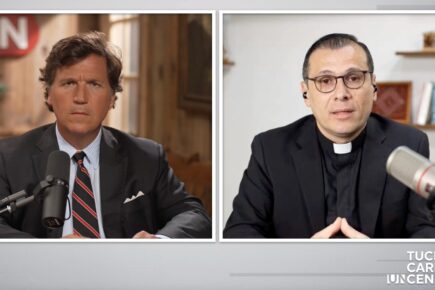
Under the guise of advocating for Palestinian Christians, Tucker Carlson launched a two-pronged assault on American Christian support for the Jewish State. To provide legitimacy for his campaign, he enlisted the help of Rev. Dr. Munther Isaac, a notorious propagandist for the Palestinian anti-Israel narrative.
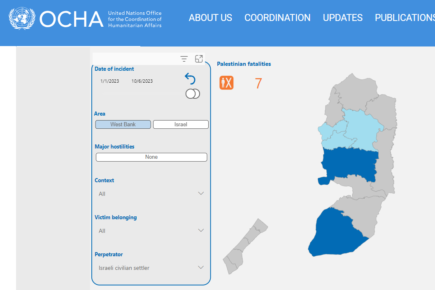
UPI's Adam Schrader falsely reports that according to UN data, Israeli settlers are responsible for most of the 199 Palestinians killed in the West Bank from Jan. 1 to Oct. 6 of last year. In fact, UN data shows seven Palestinians were killed in incidents involving settlers. In virtually all of the cases, the Palestinian fatalities were perpetrators attacking Israelis.
Foreign Affairs magazine has an illustrious history. For more than a century, the publication has published groundbreaking essays that have define foreign policy debates in both Washington and the world. But the magazine's recent Middle East coverage is replete with omissions and anti-Israel bias.
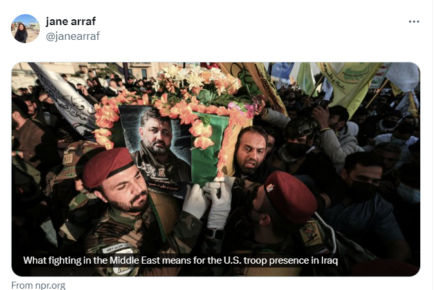
In an article that is part of NPR's "Middle East crisis — explained" special series, Jane Arraf cites non-existing "Israeli attacks on the Al-Aqsa mosque" as fueling Iraqi militia violence targeting U.S. troops.
That The Los Angeles Times cannot or will not substantiate a toxic charge redolent of an age-old bigoted trope demonizing Jews as child killers is particularly troubling in this period of unprecedented antisemitism.
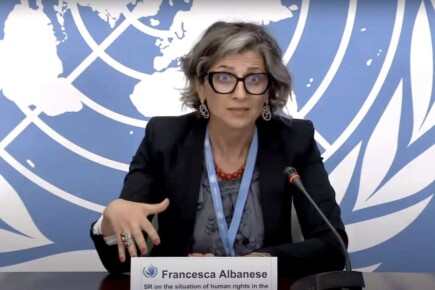
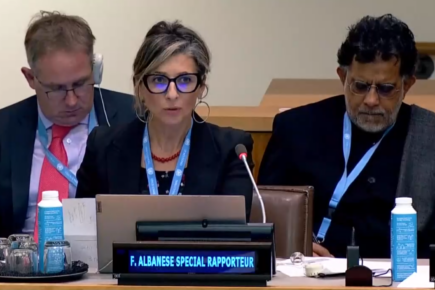
The only source for the allegations of sexual violence by Israeli forces that several United Nations "experts" were willing to point to was a public report by an organization called Women's Centre for Legal Aid and Counseling (WCLAC). Given that this is all the public has to go on to scrutinize the allegations, it is worth examining WCLAC’s report.
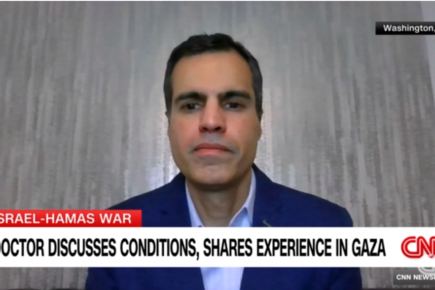
CNN bewilderingly decided to amplify an antisemite’s horrific allegations against the Jewish state, notwithstanding they lacked any supporting evidence, and without mentioning her extraordinary bias on the subject.
As CAMERA has repeatedly documented, there is a pattern of CNN reports lobbing horrific allegations at Israel based on exceedingly thin evidence and lots of insinuation. It’s a standard, or practice, akin to tabloid journalism – a standard certainly not appropriate for serious journalism or serious accusations like that of war crimes.