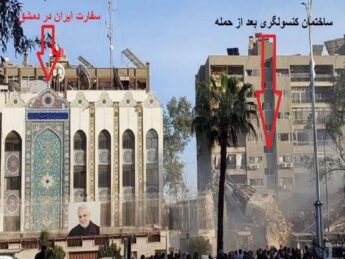
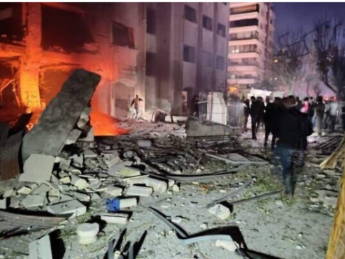
While U.S. intelligence has yet to determine whether a building attacked in Damascus is an Iranian consular facility, UPI's Adam Schrader knows: Israel "destroyed Iran's consulate in Damascus." McClatchy commendably pulled the story from two dozens sites.
The Islamic Republic of Iran is driving instability in the Middle East. As CAMERA tells the Washington Times, the Iranian regime is the leading state sponsor of terrorism and seeks to remake the Middle East.
The latest incarnation of the Israel-Iran War is unlike any conflict in the Jewish state's history. In this brief explainer, CAMERA explains why this war is different, and what is at stake.
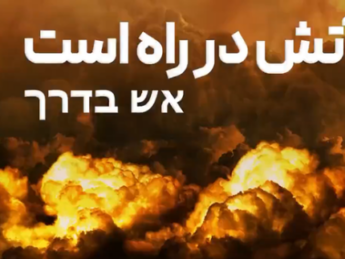
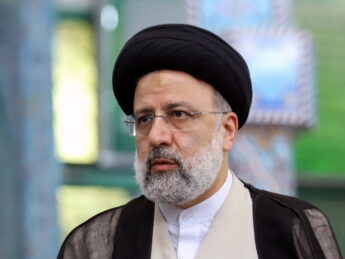
In a video unveiling a new long-range attack drone, Iran warns in Hebrew and Persian "Prepare your shelters." AP completely ignores that threat, and reports with no qualification that President Raisi "reiterated Iran's stance about friendly relations with 'all countries in the world,'"
The Washington Post is failing. In more than half a dozen reports on Israel's counterterrorist operation in Jenin, the Post repeatedly failed to provide crucial context and essential facts. The failures are so endemic, and so pronounced, that they raise questions about the future of the newspaper's coverage of the Israel-Islamist conflict.
At the beginning of July, Israeli Defense Forces launched a major counterterrorist operation in Jenin. Many mainstream news outlets failed to provide essential context about the raid. As CAMERA tells the Washington Examiner, the Palestinian Authority's support for terrorism, both implicit and otherwise, have given the leading state sponsor of terror, Iran, an opening to attack Israel.
A USA Today report on a U.S. Congressional trip to Israel offers an example of good, old-fashioned journalism. The newspaper avoided editorializing and refrained from inserting commentary while providing readers with essential information.
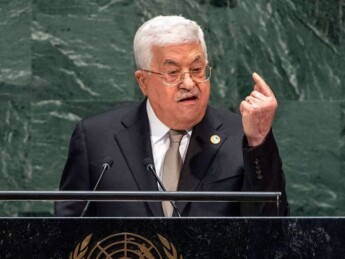
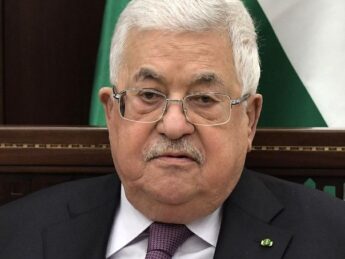
The U.S.-backed Palestinian Authority is led by an unpopular kleptocrat, Mahmoud Abbas. But as CAMERA tells Jewish Policy Center's InFocus Magazine, the end of Abbas's rule is coming, one way or the other. And the U.S. would be well advised to plan for the chaos that is likely to follow.
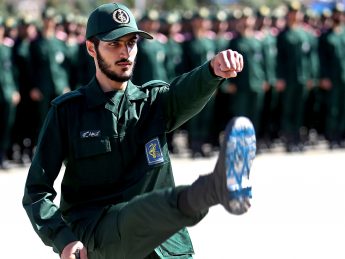
Iran is growing increasingly bold. The world's leading state sponsor of terrorism has launched more than eighty attacks against U.S. service members and bases in the last two years. As CAMERA tells the Washington Examiner this will have profound consequences for both the U.S. and key regional allies like Israel.
After initially burying Iran's reported presence in the Kafar Sousah neighborhood, Times of Israel gives more prominent coverage to the area's security and intelligence installations.