Following the April 8, 2026, U.S.-Iran ceasefire, major western outlets manufactured a false narrative accusing Israel of violating the deal based on unconfirmed claims from Tehran and Islamabad.
When it comes to Iran’s missile launchers, some may be entirely useless, damaged but repairable, or currently operational. There are myriad ways a launcher with little-to-no visible damage might no longer be functional. But the average intelligence analyst will count it as part of Iran’s launch capacity.
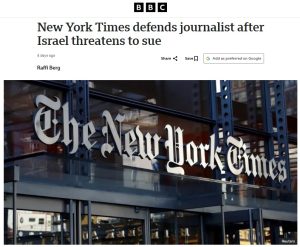
The BBC lines up behind The New York Times' defense of Nicholas Kristof's baseless opinion column alleging that Israel employs "systematic" sexual violence against Palestinians.
The New York Times wanted to examine how support for Hezbollah is impacted by the terror organization's war with Israel. Trying to demonstrate its arguments, the paper demonstrated faulty logic.
Nicholas Kristof's column charging Israel with systematic sexual abuse and rape of Palestinian prisoners was criticized for fomenting antisemitism and bad journalism. But the worst enemy of Kristof’s column is arguably Nicholas Kristof himself, CAMERA's Omri Tubi writes at JNS.
The New York Times has published a lot of biased journalism over the years. We at CAMERA know this plenty well. But the egregiousness of Kristof’s column shocks even us. Retracting it is necessary, but far from sufficient. Kristof has demonstrated he has no business being employed in the world of journalism. His editors have similarly demonstrated their complete lack of fitness for their roles.
In a pair of articles, The New York Times discovered there was nothing nefarious that could explain the overwhelming popular vote garnered by Israeli Eurovision contestants in 2024 and 2025. In grappling with how so many people voted for Israel, the authors failed to understand the moment in time.
Any credible allegations of abuse should be investigated. At the same time, Kristof’s column clearly fails to meet the standards of ethical journalism.
The New York Times published an article about a controversial opera that claims to tell the story of a terror attack in which Leon Klinghoffer -- a 69-year-old disabled American Jew was murdered in cold blood. But instead of focusing on Klinghoffer, the Times turned the opera itself into the victim.