Accuracy and accountability are among the most important tenets of journalism. In combination, they mean media organizations are expected to publish or broadcast forthright corrections after sharing inaccurate information. The following corrections are among the many prompted by CAMERA’s communication with reporters and editors.
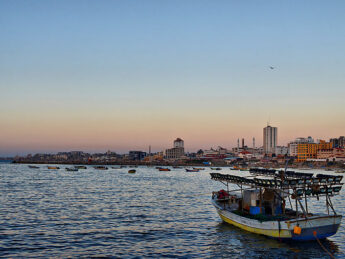
CAMERA prompts correction today after Haaretz erroneously reported in Hebrew and English that Israel imposed a fishing ban on the Gaza Strip. Israel reduced the fishing zone to six nautical miles, but there is no ban.
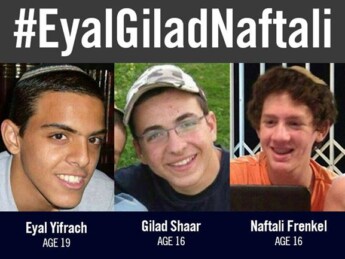
CAMERA prompts correction after Haaretz's Chemi Shalev referred to the July 2014 kidnapping and murder of three Israeli teens as "the kidnapping of three Israeli soldiers." It was a crime that shocked the nation and sparked a series of events leading to war. It's hard to imagine how the Haaretz editor got this wrong.
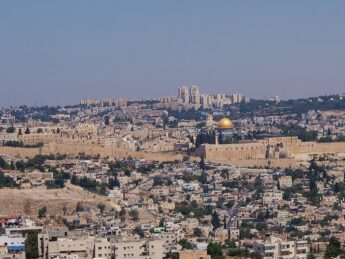
Given the complicated geopolitical realities of the disputed city of Jerusalem, journalists have a particular responsibility to be precise. That was not the case, however, when several news reports this week inaccurately placed the demolished Wadi Hummus buildings in Jerusalem.
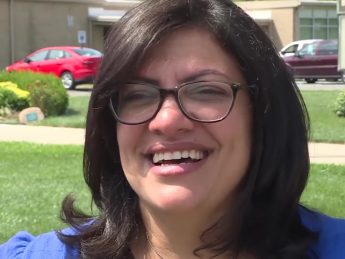
CAMERA prompts correction of a Haaretz article which erroneously identified Rep. Rashida Tlaib as "the first Palestinian-American representative in Congress." While she is the first Palestinian-American woman in Congress, others representatives of Palestinian descent preceded her.
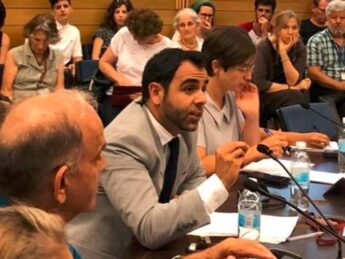
CAMERA prompts correction of a Haaretz article which incorrectly reported that the Jerusalem District Court received no evidence suggesting that Human Rights Watch's Omar Shakir had participated in BDS activity, including while serving in his capacity in Israel.
CAMERA prompts correction of a series of articles in Haaretz's English edition which erroneously reported that a Russian-Israeli meeting was dedicated to the "strengthening of the security coordination between Israel and Syria's armies." In fact, Benjamin Netanyahu's meeting with Vladminir Putin will address coordination with the Russian, not Syrian, army.
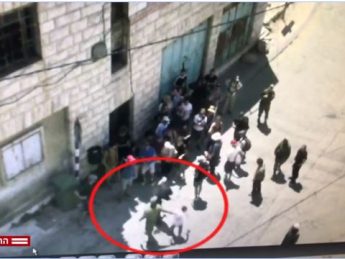
After initially reporting that abuses carried out by employees of the international monitoring group in Hebron were "alleged," Haaretz's English edition corrects, acknowledging that videos documented the vandalism and violence.
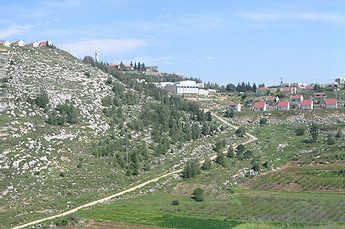
CAMERA prompts correction after Haaretz incorrectly reported that Palestinians were evicted from their homes to make way for an archaeological attraction in Shiloh.
For the third time, CAMERA prompts a Haaretz correction on Israel's "Nakba Law," which enables the Finance Minister to withhold funding from state-funded bodies which mourn the founding of Israel. Haaretz clarifies today that the law does not forbid discussion of the Palestinian "catastrophe" in public institutions.
Following communication from CAMERA, Haaretz removes a misleading characterization of Israeli settlements as "illegal" which had falsely implied that this was the position of President Bush, Sr.