In presenting "the Nakba," NPR's listeners heard activism, not journalism. Its audience was not told that Palestinian Arabs rejected the proposed UN Partition Plan or that neighboring Arab countries declared war on the new State of Israel. NPR's one-sided narrative also ignored the 150,000 Arabs who remained in Israel during the war, who make up roughly 20 percent of the Israeli population today.
In the run-up to his primary election, ABC hosted Rep. Thomas Massie. During the interview, George Stephanopoulos normalized Massie's antisemitic rhetoric and conspiracy theories by failing to challenge his bombastic statements.
In a pair of articles, The New York Times discovered there was nothing nefarious that could explain the overwhelming popular vote garnered by Israeli Eurovision contestants in 2024 and 2025. In grappling with how so many people voted for Israel, the authors failed to understand the moment in time.
A superficial, softball interview of Irish hip hop band Kneecap ignored the group's hateful, inflammatory, anti-Israel rhetoric. NPR abandoned journalistic integrity in favor of cool vibes.
NPR surveyed the damage in southern Lebanon while escorted by a Hezbollah propagandist. Its report ignored Hezbollah's human shield strategy, attacks on Israel and how the terror group's tactics mirror those of Hamas.
Former Department of Homeland Security official Fayrouz Saad spoke with NPR about her family's connection to Bint Jbeil, Lebanon, following the destruction of her family's "ancestral home" there. Referring to the village as quaint, Saad omitted any reference to PLO control at the time her parents left Lebanon or to Hezbollah presence there in the last several decades.
New allegations on International Criminal Court prosecutor Karim Khan's relationship with Qatar. Israel sent defense systems and Israeli troops to UAE to help defend against Iranian missiles in March. Hamas sexually assaults young Gazan boys and the mainstream media has been silent.
NBC relied on commentary from Israel-hating "experts" and ignored Hezbollah's perfidious tactics to produce manipulative reporting that import to Lebanon the "Israel is targeting health care workers" libel from Israel's two-year war against Hamas in Gaza.
In writing about the temporary, extended ceasefire between Israel and Lebanon/Hezbollah, NPR needed only one sentence to subtly manipulate readers into believing Hezbollah's war is only on the Israeli military whereas Israel's war is on Lebanon generally. In doing so, it crafted a narrative and inverted reality.
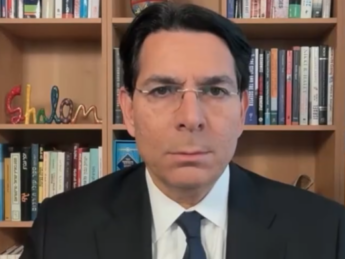
In an interview with a Hezbollah leader, a group that is recognized as a terrorist organization by the United States, PBS posed open-ended questions and engaged in polite, civil discourse. This contrasted sharply with a PBS interview of Israeli Ambassador to the U.N. Danny Danon, which was marked with hostility and accusations masked as questions.