In March, the New York Times asserted that Israel played an outsized role in the White House's decision to go to war with Iran. But in June, the publication claimed that it was mere "perception" that Israel dragged the U.S. to war. What changed? Does The Times know the facts?
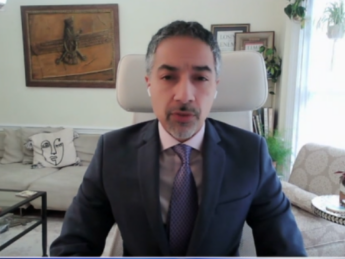
Perhaps Moaveni does not touch on any of Iran’s countless aggressions because even she cannot justify them, so she decides that it is best not to remind readers of the list.
ABC News invited two Iranian regime apologists to discuss Iran and Lebanon. The host failed to challenge even one word of their analyses, leaving viewers with a distorted view of how the Middle East functions.
"Former U.S. Secretary of State Henry Kissinger once said that Iran had to decide whether it wanted to be a nation or a cause," CAMERA's Shay Khatiri writes for JNS, adding, "But Iran had already decided that it wanted to be a cause and an empire."
Following the media's hyperfocus on the ICC’s 2024 request warrants against Israeli Prime Minister Netanyahu and Defense Minister Gallant, the press corps has gone quiet on the case's latest hiccups, including the suspension of chief prosecutor Karim Khan.
In response to communication from CAMERA, more than two dozen McClatchy newspapers delete a UPI story which falsely stated that Iran's June 7 attack on Israel was the Islamic Republic's first strike on Hezbollah's behalf.
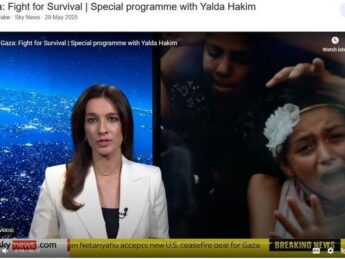
Sky News presenter Yalda Hakim interviewed Jeremy Scahill, a “journalist” with Drop Site News, known for promoting pro-Hamas and pro-Iranian regime propaganda, and failed to challenge any of his extremist views.
O’Connor introduced Hassan Beheshtipour simply as “an Iranian international affairs analyst.” But Beheshtipour was a journalist for Iranian state television and was close to the office of the late supreme leader, Ali Khamenei.