ABC News invited two Iranian regime apologists to discuss Iran and Lebanon. The host failed to challenge even one word of their analyses, leaving viewers with a distorted view of how the Middle East functions.
"Former U.S. Secretary of State Henry Kissinger once said that Iran had to decide whether it wanted to be a nation or a cause," CAMERA's Shay Khatiri writes for JNS, adding, "But Iran had already decided that it wanted to be a cause and an empire."
Following the media's hyperfocus on the ICC’s 2024 request warrants against Israeli Prime Minister Netanyahu and Defense Minister Gallant, the press corps has gone quiet on the case's latest hiccups, including the suspension of chief prosecutor Karim Khan.
In response to communication from CAMERA, more than two dozen McClatchy newspapers delete a UPI story which falsely stated that Iran's June 7 attack on Israel was the Islamic Republic's first strike on Hezbollah's behalf.
Sky News presenter Yalda Hakim interviewed Jeremy Scahill, a “journalist” with Drop Site News, known for promoting pro-Hamas and pro-Iranian regime propaganda, and failed to challenge any of his extremist views.
O’Connor introduced Hassan Beheshtipour simply as “an Iranian international affairs analyst.” But Beheshtipour was a journalist for Iranian state television and was close to the office of the late supreme leader, Ali Khamenei.
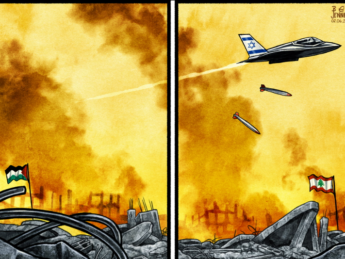
A propagandistic Guardian cartoon about destruction in Lebanon and Gaza erases terror groups entirely, and is a perfect illustration of the outlet's myopic coverage of the war which began when Hamas carried out their barbaric pogrom on Oct. 7.
The New York Times is using anonymous sources in its reports on key events in the US-Israel-Iran war. This leads to some incredible reporting, and not necessarily in a good way.
Udi Segal came unprepared for his Channel 13 interview with Tucker Carlson. The Israeli journalist failed to put the American on the spot regarding the murderous Iranian regime, Carlson's history of false statements about Israel and Jews, and Hamas' use of human shields, among other misses.
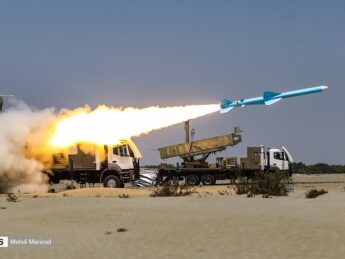
When it comes to Iran’s missile launchers, some may be entirely useless, damaged but repairable, or currently operational. There are myriad ways a launcher with little-to-no visible damage might no longer be functional. But the average intelligence analyst will count it as part of Iran’s launch capacity.