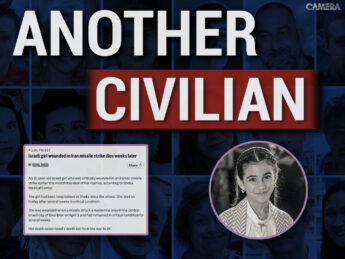
After the AP initially ignored the death of 11-year-old Nesya Karadi, who succumbed to the wounds she suffered in an Iranian cluster munitions attack, CAMERA prompted coverage that was carried in more than 150 media outlets. All of the fatalities within Israel and the PA-controlled West Bank from Iranian missile attacks have been civilians, underscoring the Iranian regime’s use of cluster munitions in attacks against densely populated residential areas, almost certainly a war crime.
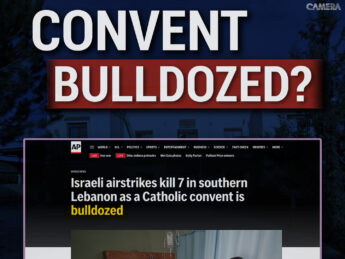
Did the AP base its “convent is bulldozed” headline on unconfirmed rumors relayed by someone who was not on the site and didn’t see it for herself? CAMERA calls on the AP either to produce direct substantiation that the convent was bulldozed, or to retract its false headline.
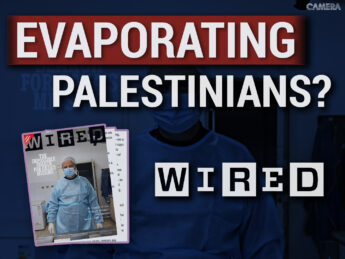
Hamas has alleged (without evidence) that Gazans have been effectively "evaporated" by science-fiction-like extreme-heat munitions, leaving no recoverable bodies, a charge which the Israeli military has emphatically denied. WIRED, which prides itself on rigorous investigation and technological expertise, took the outlandish claim and put it in a cover story.
St. George is one of the most famous and recognizable Christian saints, often depicted slaying a dragon. He’s the patron saint of England, Georgia, and soldiers, among many other things.
So what does he have to do with Israel?
NPR’s multiple reports on the attempted terror attack against a Michigan synagogue ignored any voices from the Temple Israel community, though as CAMERA swiftly documented, within two days of the attack, the network was on the ground in the attacker's Lebanese hometown to report on the "grief and fear" there. After hearing from listeners, including many CAMERA readers, NPR's public editor admitted the extraordinary lapse. Will NPR take the lesson to heart?