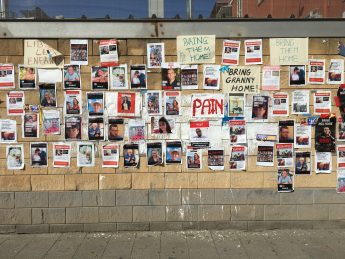
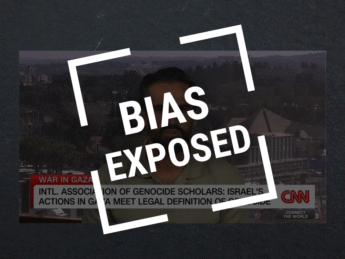
CNN's Jeremy Diamond and Tal Shalev’s Oct. 8, 2026, article on Israeli hostages killed in captivity illustrates exactly how little blame the reporters place on Hamas for the hostage crisis, and how willingly they blame Israel for the crimes of Palestinian terrorists.
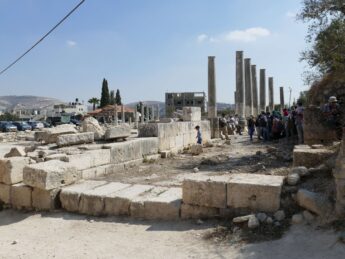
What do CNN and the British Museum have in common? Under the guise that ancient history belongs to everyone, both use a site's long history of foreign invasion as an excuse to erase the original indigenous people who built it.
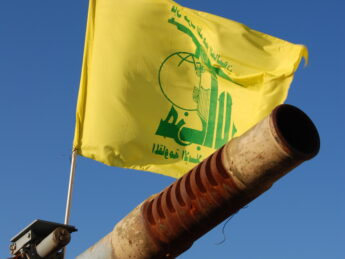
A CNN analysis featured a misleading graph tracking strikes between Hezbollah and the IDF from October 2023 to June 2026. The cherry-picked data distorted the reality of the war, while also highlighting a broader issue: the consequences of newsrooms uncritically relying on politicized NGO datasets.
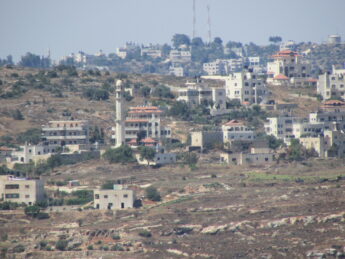
CNN selectively edited an IDF statement to convey a one-sided, unsubstantiated report on "settler violence" in the West Bank town of Jiljilya, deliberately omitting the crucial context of a prior theft and a high-risk military extraction.
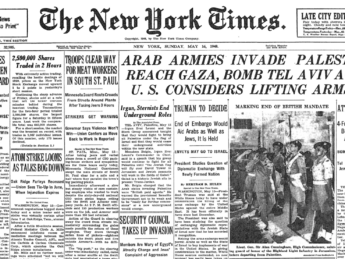
CNN's article on a crime wave in Israel's Arab sector distorts history to portray the Arab sector as perpetual victims of Israel, erasing Arab aggression in the 1948 war and the positive contributions of many in the sector to Israel today.
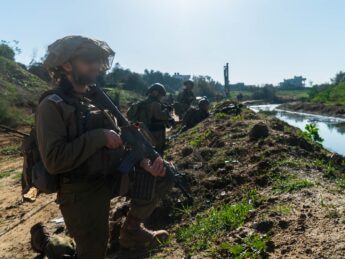
Once again, CNN journalists make – in their own words – a horrific allegation against Israeli soldiers. Predictably, the allegation – that Israeli soldiers are using Palestinians as human shields – is short on credible evidence. Instead of acting like professional journalists, the authors act as partisan activists like the ones making the accusation.
CNN clearly understands that bad journalism not only does a disservice to its audience, but it also puts innocent civilians in danger. So, what are we to make of the fact that these reporters are knowingly repeating the same mistakes?
In the world of journalism, there are understandable errors, and then there are the types of errors that make you wonder whether the journalists are living in the same reality.