
On Mar. 23, 2026, The New York Times published an interview with General Stanley McChrystal (ret.), conducted by opinion columnist David French. McChrystal opened his remarks with two major errors about Iranian history and present society. The remainder of his analysis rests on these errors and should be seen through that lens.
“We have a tendency in America to view things in very short periods.… We tend to come in and say we are going to fight the war to end all wars, at least in our minds,” McChrystal said. He continued, “But for Iranians about my age — I’m 71 now — for an Iranian, it really starts in 1953, when the U.S. and British intelligence services overthrew the constitutionally elected prime minister and put back into power the Peacock Regime of the Shah.” There are several faulty assumptions and analyses here.
For context, in 1951, Mohammad Mossaddegh ascended to Iran’s premiership for a second time after the incumbent, Hossein Ala’, resigned. Mossaddegh’s ascent was in line with democratic procedures. Immediately, Mossaddegh began fighting with the king over political power, especially whether the military should be loyal to the monarchy or the prime minister. In August of 1953, the shah tried to replace Mossaddegh, but failed and fled Iran. Three days later, with help from the CIA, Mossaddegh’s government fell, and the shah returned to Iran.
Now consider some of the ways McChrystal’s statements are misleading and out of context.
First, why is McChrystal focusing on Iranians his age? Only approximately 3 million Iranians, about 3 percent of the population, are above 70 years old. The vast majority of Iranians were born after the 1979 Islamic Revolution. It is these younger Iranians whose perspective matters, especially considering it is they who would fight for the regime against the United States and Israel or lead a revolution against the Islamic Republic with help from the coalition force.
Second, McChrystal is wrong on history. The events of 1953 are a much bigger part of the American psyche than the Iranian psyche today, both for the people and the Islamic Republic regime.
To say that Iranians hate America for ousting Mossaddegh and reinstalling the shah is contradicted by surveys of Iranian public opinion. A 2022 survey conducted by GAMAAN, an Iranian diaspora polling organization, found that 16 percent of Iranians have a very favorable view of Mossaddegh, 35 percent a somewhat favorable view, and, tellingly, 21 percent had “no opinion.” If Mossaddegh’s ouster was actually a critical juncture in the Iranian psyche, surely a fifth of the population would not have ignored him. In contrast, 33 percent had a very favorable view of the last shah, Mohammad-Reza Pahlavi, and 31 percent had a somewhat favorable view. Nine percent had “no opinion.”
The regime is no more a fan of Mossaddegh. The Islamic Revolution consisted of three factions: the Islamists, the communists, and the religious-nationalists, who were Mossaddegh’s political descendants. In its infancy, the Islamic Republic included religious-nationalist figures, including Mehdi Bazargan, who became the prime minister of the post-revolutionary transitional government; Ezzatollah Sahabi, who was a member of the constitutional assembly and later the parliament; and Sadegh Ghotbzadeh, who was the minister of foreign affairs and then directed the state broadcasting. In one of its first acts, the transitional government of religious-nationalists renamed the largest street in Iran from Pahlavi Street to Mossaddegh Street.
But following the 1979 hostage crisis, Bazargan resigned. Ghotbzadeh was executed for plotting a coup against Supreme Leader Ruhollah Khomeini. Sahabi was politically purged and spent time in prison in the aftermath of the Green Movement. The Mossaddegh Street was renamed after the Twelfth Imam in 1981. The regime might not love Mossaddegh, but it has a lot of use for him in controlling useful idiots in the United States
Third, the irony of Mossaddegh’s reputation as a democratic hero is that he was viewed as the opposite in his own time, including by the U.S. Embassy in Iran.
Mossaddegh was not a democratically elected prime minister. He became prime minister for a second time after his predecessor resigned. He then called for elections, which his government controlled, but did not allow for the full counting of votes. As New York University historian Ervand Abrahamian explained, “Realizing that the opposition would take the vast majority of the provincial seats, Mosaddeq (sic) stopped the voting as soon as seventy-nine deputies—just enough to form a parliamentary quorum—had been elected.” He won the election via fraud, and it is quite plausible that he would have lost it without interference.
He did not govern constitutionally, either. In 1953, he and the shah had been at odds over the control of the military. Mossaddegh had been purging senior officers, replacing them with those loyal to him. He also dissolved both chambers of parliament. Mossaddegh had a doctorate in law. In his capacity as a constitutional expert, he had previously written that, in the absence of the parliament, the shah had the power to replace him. Stanford University historian, Abbas Milani, writes that Mossaddegh was warned about this prospect but responded, “He (the shah) does not have the guts.” He was wrong.
The shah replaced Mossaddegh with Fazlollah Zahedi on Aug. 15, 1953. But Mossaddegh refused to abide by the constitutionally valid order and instead ordered the arrest of the colonel carrying out the royal decree. Fearing for his safety, given that the military had been filled with loyalists, the shah fled the country. Mossaddegh had executed a coup against the constitution of Iran.
Contrary to popular belief, it was not the CIA and MI6 that led to the re-installment of the shah. This myth largely comes out of the memoirs of Kermit Roosevelt, who was the lead CIA officer in Iran. As the saying goes, nobody has ever come second in their own memoirs, and Roosevelt is no exception. His memoirs vastly exaggerated the extent of American involvement in reinstalling the shah.
Later scholarship and the declassification of relevant documents in 2017 confirm that the CIA and MI6 had given up on reinstalling the shah, who was in Rome looking for jobs. But on Aug. 19, 1953, there was an indigenous uprising in Tehran to restore the monarchy. CIA officers embedded themselves into the crowd to give it direction. Roosevelt found Zahedi, who was in hiding, and took him to the national radio station, protected by the crowd. There, he read the royal decree on radio, exposing Mossaddegh’s coup. The counter-coup succeeded, and Mossaddegh’s regime fell immediately. Unfortunately, the shah viewed his popularity as a mandate to become an autocrat and began expanding his rule over Iran. But that was not at American encouragement.
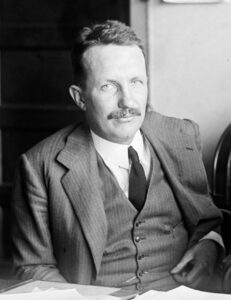
McChrystal also gets the present wrong. “I couldn’t name the opposition leader. I couldn’t tell you the liberation front of Iran. I know that the shah’s son (Reza Pahlavi) is going around, but I don’t think he’s a legitimate alternative,” he said. Then he added, “I think that we can’t gauge the actual strength of the desire of Iranian people to change. And, of course, a war will often cause people to coalesce around their government.”
Whether Pahlavi is organized enough is an open question, but his popularity is indisputable, evident by millions of Iranians who chanted his name on the streets in January, as well as polls showing him to be, by far, the most popular Iranian political figure. GAMAAN’s 2025 survey found that 49 percent of Iranians accept him as a transitional figure, and a plurality prefer the monarchy to succeed the Islamic Republic. The Immortal Guard is the name of Pahlavi-led underground resistance, which McChrystal could not name. Kurdish groups are another network of organized resistance.
Last, McChrystal doubting the “actual strength of the desire of Iranian people to change” and assumption that they would rally around the regime is both offensive and falsifiable. Iranians proved the strength of their desire with the blood of 36,500 in January, which was the worst massacre of civilians in modern human history, fighting armed guards with bare hands. In the aftermath of the massacre, they begged for foreign military intervention. NPR conducted interviews on the Iranian border with people who had just fled the war, who told journalists that they and their compatriots remain supportive of the United States and Israel, whom they view as allies against a shared enemy.
In The Soldier and the State, Samuel Huntington wrote that the expertise of an officer is the “management of violence.” Most officers lack political acumen. Senior officers rely on civilian political advisers to make up the gap while commanding a war. McChrystal is an expert in military affairs. It is understandable that he is out of his depth on Iranian history, domestic politics, and societal attitudes. This is why he should have refrained from commenting on matters about which he is uninformed. Unfortunately, The Times’ audience will confuse him for an Iran expert – which he is decidedly not – and treat his remarks with the seriousness they do not deserve.