
Famously, the slogan “All the News That’s Fit to Print” graces the front page of every New York Times edition. The slogan was coined at the end of the 19th century by the paper’s publisher, Adolph Ochs. Of course, in today’s hyper-globalized world, the slogan is wishful thinking. No paper could realistically cover all the important news stories of the day.
Still, it would be hard to argue that outlets like the New York Times, the Washington Post, CNN, and others adequately cover even those stories they do print. They often devote precious space to emotive or opinionated claims, while omitting highly material and relevant information that sheds important new light.
Provided below are three important, but underreported, stories from the week bearing on Israel and the Middle East that media consumers should know.
Eli Sharabi’s ‘Hostage’ memoir named Jewish book of the year
Eli Sharabi’s ‘Hostage’ memoir was named Jewish book of the year on Wednesday by the Jewish Book Council, highlighting the profound impact Oct. 7 and the subsequent two years of war have had on global Jewry.
Congratulations to Eli Sharabi on his memoir, HOSTAGE, winner of the Book of the Year Award. https://t.co/Gu4WeCsPwC pic.twitter.com/9TfqDNsVQE
— Jewish Book Council (@JewishBook) February 18, 2026
Reviewer Jaime Herndon said Sharabi’s observations and thoughts on “survival, endurance, and hope are much needed at this moment.” Herndon highlighted an excerpt from Sharabi’s memoir in which he portrays hope as a deliberate act, nurtured through prayer, ritual, and gratitude – a steadfast pursuit of optimism even in the hardest times.
Many Jewish and Israeli news outlets have written about the phenomenon known as the “Oct. 8 Jew,” a term popularized by a Bret Stephens New York Times column published about a month after the Oct. 7 massacre. The concept contrasts the “Oct. 7 Jew” with the “Oct. 8 Jew” to describe the shift many Jews around the world experienced in the attack’s aftermath.
For some, an existing connection to Jewish identity or to Israel deepened. Others, who had been more distant from Jewish communal life or from Israel, experienced a sudden awakening to Jewish vulnerability and solidarity, and began adopting visible expressions of Jewish identity, such as wearing a Star of David, lighting Shabbat candles, or attending synagogue services.
These new practices suggest a widespread search for light in a shared period of darkness. The award is significant because it highlights how Jewish readers of Sharabi’s book found his determined search for light relatable.
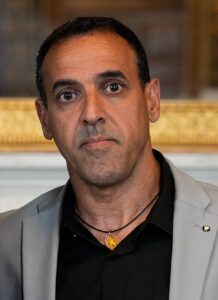
Former Hostage Eli Sharabi, London, UK, June 23, 2025. (credit: Foreign, Commonwealth & Development Office, CC BY 4.0, via Wikimedia Commons)
International media has failed to capture this enduring sentiment even two years after the massacre. While outlets like the Associated Press and the Washington Post have reported on American Jews’ opinions towards the war, and Axios and Reuters have noted rising antisemitism, few non‑Jewish, non‑Israeli outlets have conveyed the lived experiences, resilience, and communal search for light that Sharabi’s book reflects.
The Jewish world should not exist solely in statistics, surveys, or abstract reporting. The hope, courage, and steadfastness of the Jewish people in the darkest times deserve to be seen and heard. Yet that representation remains largely absent.
Arbel Yehoud reveals sexual abuse in Palestinian Islamic Jihad captivity
Former hostage Arbel Yehoud said she was sexually assaulted “almost every single day in captivity,” in a Daily Mail interview published on Feb. 13. In a N12 interview, aired the same day, Yehoud said that she identified with much of former hostage Romi Gonen’s interview in which she recalled the sexual abuse she experienced while in captivity.
However, Yehoud said “even after I got to see the horrors that Romi had gone through, the gap remained,” hinting that what she experienced in captivity was worse than what Gonen described. She further stated, “The things I went through, I went through from beginning to end, so they’re in a sealed suitcase.”
Yehoud did not go into further detail in either interview on the sexual abuse, but the implications were clear. Yehoud said in both interviews that she tried to commit suicide three times because of the abuse.
This interview highlights the pattern of sexual assault Israeli hostages experienced in Gaza. From Amit Soussana to Rom Braslavski to Romi Gonen, numerous former captives and survivors of the Oct. 7 attacks have recalled the systematic use of rape in the attacks and throughout captivity.
Feminist Susan Brownmiller first brought attention to the paradigm of rape as a tool of war in her 1975 book, Against Our Will: Men, Women, and Rape, challenging pre-existing notions that rape is an inevitable byproduct of conflict. She instead argued that rape is a conscious, systematic tool used deliberately to humiliate populations and assert dominance.
Her preposition has since been widely accepted by the United Nations and international non-governmental organizations.
Taken together, it is evident that the experiences of survivors of the Oct. 7 attack and terror captivity indicate a purposeful, systematic, and widespread tactic among Palestinian terrorist groups, not isolated to Oct. 7.
While international news media has covered other testimonies indicating such a trend, notably those of Soussana and Braslavski, not a single major legacy outlet covered Yehoud’s account, despite the severity she described. The silence is striking.
Outlets that still provide extensive, often wall‑to‑wall coverage of Palestinian suffering in Gaza now decline to extend the same attention to Israelis reporting sexual violence in captivity. The result is a glaring double standard – one that implicitly signals which suffering counts and which can be ignored.
US Ambassador to Belgium sets off diplomatic firestorm highlighting antisemitism in EU member state
US Ambassador to Belgium Bill White ignited a diplomatic firestorm on Wednesday after he posted on X/Twitter that the EU member state must drop all investigations against three men in Antwerp, who were accused of performing circumcisions without certified medical training.
Anti Semitism is UNACCEPTABLE in any form & it must be rooted out of our society.
President TRUMP @POTUS @realDonaldTrump @JDVance @VP @SecRubio @StateSEAS @DeputySecState and I call upon all of Belgium to do a much better job on this subject !
TO BELGIUM,
SPECIFICALLY YOU…
— Ambassador Bill White (@BillWhiteUSA) February 16, 2026
He called the case antisemitic and argued that Belgium must do a better job at rooting out such bigotry in the scathing tweet.
Belgium’s Deputy Prime Minister and Foreign Affairs, European Affairs, and Development Cooperation Maxime Prevot summoned the ambassador immediately and responded on X, arguing that suggesting Belgium is antisemitic is false, offensive, and unacceptable. He accused White of not respecting Belgium’s institutions and the independence of its judicial system and said White’s demands violate basic diplomatic norms.
(EN) Any suggestion that Belgium is antisemitic is false, offensive, and unacceptable. Belgium condemns antisemitism with the greatest firmness. The fight against antisemitism, and all forms of hatred and discrimination, is an absolute priority for our country.
Everyone must be…
— Maxime PREVOT (@prevotmaxime) February 16, 2026
As White and Prevot continued to trade barbs, both Israeli Foreign Minister Gideon Sa’ar and Diaspora Affairs Minister Amichai Chikli replied to minister Prevot, spotlighting how Belgium allows the proliferation of antisemitism throughout the government and in its society.
Minister Prevot,
No mountain of words can obscure the stark reality published by your own federal agency for threat analysis, OCAM: “Jewish communities are the primary target of terrorism in our country.”
Under the government in which you serve, Belgium has become a dangerous… https://t.co/heTxZ1LXca
— Gideon Sa’ar | גדעון סער (@gidonsaar) February 17, 2026
Their involvement signals that this is not just a domestic legal matter, but rather a topic of global Jewish interest, and asserts Israel’s role as a defender of Jewish religious practices abroad. The additional weight of the two Israeli ministers adds pressure on Belgium to comply with White’s demands.
Mr. Prévot,
Let’s really be honest, shall we.
You state that there is a coordinator for the fight against antisemitism.
There is not.You claim to be outraged by antisemitism, yet your government has remained silent while three major Belgian universities are planning to… https://t.co/wZKtNR1SK8
— עמיחי שיקלי – Amichai Chikli (@AmichaiChikli) February 18, 2026
This is not the first case in which Belgium has been accused of limiting Jewish practices. In 2024, Europe’s top court upheld a ban in most of the country against kosher slaughter, which its critics contend is inhumane to animals.
Brussels acts as the de facto capital of the European Union and hosts the main seats of the numerous EU bodies. It also serves as a major working location for the European Parliament.
This role gives this case heightened visibility and international significance. Criticism of Belgium’s handling of the mohel investigations not only challenges its domestic judiciary but also touches on the EU’s broader reputation for upholding minority rights, religious freedom, and the rule of law.
The Associated Press and The Washington Post reported on this feud in the context of heightened tensions between US and Europe, however little attention was paid to Israel’s intervention, and what precedent these restrictions on Jewish rituals would set for Belgium’s Jewish community and the western world.
Notably, the New York Times, along with the aforementioned papers, failed to mention that Antwerp’s Jewish community has been living under the second highest terrorism threat level since 2014, according to the police, and is the main target of potential terrorist attacks in Belgium.