
Key Findings
- Activism Over Historical Literacy: By limiting context on complex subjects like Sharia law and terrorism, the curriculum steers students toward predetermined conclusions rather than independent analysis.
- Thematic "History of Grievance": The curriculum shifts away from chronological study in favor of a framework centered on critiques of capitalism and settler colonialism.
- Erasure of World History: Major global milestones—including the Enlightenment, the French Revolution, and both World Wars—are marginalized or entirely omitted.
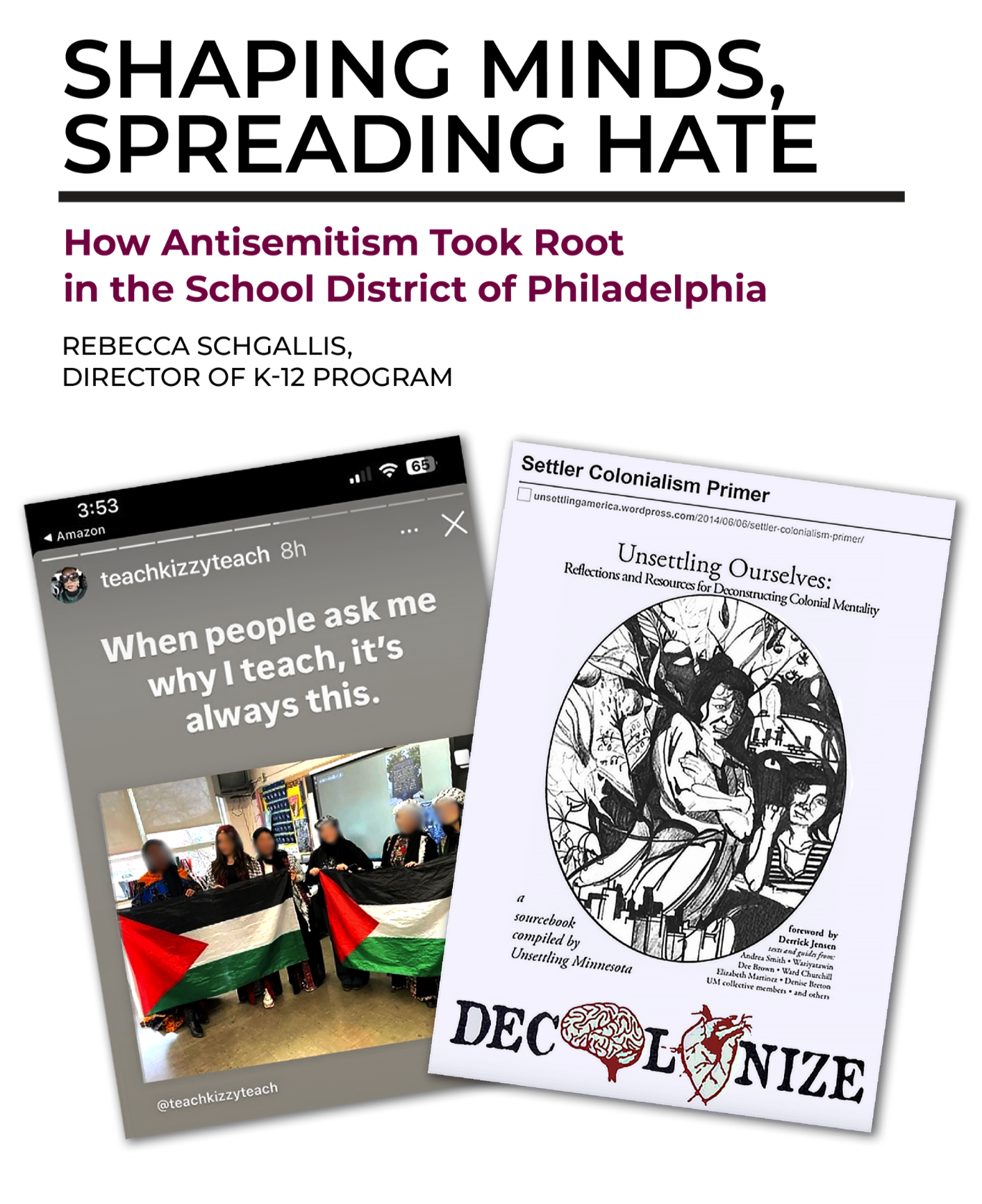
CAMERA’s analysis of the School District of Philadelphia’s social studies curriculum identifies several troubling gaps in what students are taught. Grounded in a critical race theory framework, the curriculum emphasizes a thematic “history of grievance,” largely at the expense of chronological historical study. Instruction prioritizes critiques of capitalism, racism, and settler colonialism while marginalizing major world-historical developments, including the Enlightenment, the French Revolution, World War I, World War II, and the Cold War, which are either minimally addressed or omitted entirely. This pedagogical approach, combined with the curriculum’s limited contextualization of controversial subjects such as Sharia law, jihad, and terrorism, steers students toward predetermined conclusions rather than fostering independent historical analysis.
How can students graduate from high school with little to no exposure to major movements in world history? CAMERA’s report serves as a wake-up call to communities nationwide: vague social studies standards and the absence of state assessments effectively give schools and ideologically driven educators a permission slip to reshape history curricula in service of a political agenda, producing classrooms that prioritize activism over historical literacy.
Independent analysis depends on public support.
Donations allow CAMERA to continue this work nationwide.
Related Video: Report Overview