
NPR’s Daniel Estrin engaged in a shocking display of journalistic malpractice on a recent Sunday Story podcast episode when he claimed, without a shred of empirical evidence, that the “prevalent view” of Israelis, heard in “everyday conversation,” was to “Kill all the Arabs.”
In addition to the demonizing, offensive and patently false generalizations he ascribed to the Israeli public wholesale, the 42-minute episode, “Israelis have changed. Will they change their leader?” (Oct. 18), was also replete with factual inaccuracies and misleading statements which all seemed to serve one goal: vilifying the Jewish State, its military and its people, making them out to be warmongering and bloodthirsty. In addition to giving its audience a whiff of the genocide and other libels, aligning with the unsupported allegations many of NPR’s wildly antisemitic, anti-Israel guests have made on the outlet’s various platforms, it wrongly painted Israel as the regional aggressor.
Israelis Demonized as Genocidal and the Israeli Military as Disproportionately Violent
NPR suggested many people in the United States might not realize how “hardened and polarized Israelis” have become. This quickly turned into demonization of the Israeli public writ large. Estrin’s sweeping generalizations, in full, were as follows:
‘No mercy for people in Gaza.’ That’s the prevalent view of most Israelis I meet. No matter their age, no matter whether or not they served in uniform or support Netanyahu. ‘There are no innocent people in Gaza.’ Or, ‘I don’t have room in my heart for the suffering of Palestinians in Gaza.’ These are not phrases that are whispered. This is everyday conversation. So is, ‘kill all the Arabs. Everyone in Gaza should leave. What Israel did in Gaza wasn’t enough.’ These are phrases Israelis have told me just over the last few weeks. And if you turn on primetime TV news in Israel, you hear journalists saying similar things, like, ‘There are no uninvolved civilians in Gaza.’
Estrin’s reliance on unquantified, personal anecdotes to present a “prevalent view” is journalistic malpractice. It not only reflects a sampling bias – because we have no idea who he spoke to – but, methodologically, he cannot extrapolate a national consensus from a few conversations without backing it up. Estrin cited no polls in making such statements, including the most outrageous, false and conveniently genocidal sounding, “Kill all Arabs.” If this were the prevalent view of Israelis, one would imagine that the 20% of Israeli Arabs and their political leaders would have a lot to say about it. (CAMERA contacted NPR to address this unsupported claim, but the outlet did not respond.)
Similarly, the alleged prevalent view that “Everyone in Gaza should leave,” is also unsupported empirically.
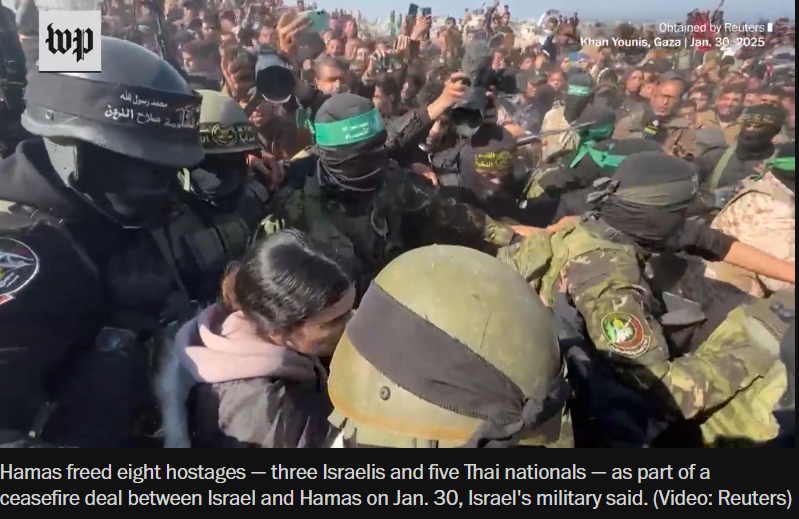
When Estrin played a clip from Israeli Channel 12 news, claiming a presenter said, “there are no uninvolved civilians in Gaza,” he omitted crucial context. The commentary was from almost two years ago: either Jan. 19, 2025, as the nation of Israel watched the horrifying, Hamas-staged hostage transfer of Romi Gonen, Emily Damari and Doron Steinbrecher, or on Jan. 30, 2025, when Hamas released Agam Berger, Arbel Yehoud, Gadi Mozes as well as five Thai hostages, and Gazan crowds both celebrated and looked ready to lynch the hostages. The Channel 12 commentators’ inferences were that such images showed Gaza’s public was not “uninvolved.” Moreover, news commentators do not represent the Israeli public or convey national policy.


Estrin also described Israel’s response to the Oct. 7 Hamas massacre as “an Israeli military onslaught that was exponential in its proportions. More than 74,000 Palestinians killed by Israeli attacks. Most of Gaza destroyed.”
There was no acknowledgment that natural deaths and approximately 25,000 terrorists were included in that number, or that the combatant to civilian fatality ratio was historically low for comparable urban combat operations.
Further, Estrin did not explain Hamas built an underground tunnel system longer than the London Underground to protect its fighters – not civilians – and embedded itself underneath and in civilian infrastructure so that its civilians would serve as human shields.
Israel Falsely Painted as the Aggressor
While initially stating Israel retaliated with war in Gaza after the Hamas attack on Oct. 7, 2023, NPR later described Israeli Prime Minister Benjamin Netanyahu, as having “launched attacks throughout the region, from Gaza to Iran.” NPR then posed the question of whether Netanyahu should be re-elected “so he can continue his wars to reshape the Middle East as he’s done since October 7th?”
Whether a fan of the Prime Minister or not, these were not “his wars” and the attacks were not ones he “launched.” Israel has, to the contrary, been fighting retaliatory wars and preempting imminent threats across the region.
Hamas viciously attacked Israel on Oct. 7, 2023, massacring approximately 1,200 people, wounding thousands more, and kidnapping 251. Israel defended against a war launched by Hamas; its stated aims were to destroy Hamas and return the hostages.
Hezbollah attacked Israel the next day, starting another front in the war until a ceasefire was reached with Lebanon which was supposed to include Hezbollah. The terror group resumed firing at Israel on Mar. 1, 2026.
The Yemen-based Houthis first launched missiles on Israel on Oct. 19, 2023, and did so intermittently until June 8, 2026, the last recorded attack. Israel has consistently responded with strikes against the Houthis.
Iran first launched missiles at Israel on April 12, 2024. Israel retaliated. Israel’s strikes on Iran in June 2025 were part of the same ongoing armed conflict.
Later in the episode, NPR said, “[Israel] has sent soldiers to capture new territory in the West Bank, Gaza, Lebanon and Syria,” misleading listeners into believing Israel went on a land-grabbing quest. With respect to Gaza, Lebanon and Syria, Israel created temporary security zones to protect its civilians near those borders until malign actors in those areas are disarmed. It is unclear why or how the West Bank was included in this list because IDF military operations there did not “capture new territory.”
Under the guise of discussing the Jewish state’s upcoming election, NPR’s presentation on Sunday Story (the only episode the podcast devoted to a foreign election in years) was an exercise in painting the Israeli people, military and the country as a whole, as genocidal. NPR’s audience should demand to know where NPR’s factcheckers were when they allowed Estrin to turn alleged anecdotes into a wholesale indictment of an entire country. Would the outlet have allowed that for any other group of people?