
Famously, the slogan “All the News That’s Fit to Print” graces the front page of every New York Times edition. The slogan was coined at the end of the 19th century by the paper’s publisher, Adolph Ochs. Of course, in today’s hyper-globalized world, the slogan is wishful thinking. No paper could realistically cover all the important news stories of the day.
Still, it would be hard to argue that outlets like the New York Times, the Washington Post, CNN, and others adequately cover even those stories they do print. They often devote precious space to emotive or opinionated claims, while omitting highly material and relevant information that sheds important new light.
Provided below are three important, but underreported, stories from the week bearing on Israel and the Middle East that media consumers should know.
1) Gaza Water Pipelines
The Gaza Strip’s access to clean water continues to improve dramatically. Prior to October 7, 2023, only about 10% of Gaza’s water came from Israel through three water pipelines. During Hamas’s attack, all three were damaged. Since then, all three pipelines have been repeatedly repaired, with the Bani Suheila pipeline resuming flow again on September 14. Notably, the northern water pipeline alone is capable of providing the minimum water needs for over one million people – nearly half of Gaza’s entire population.
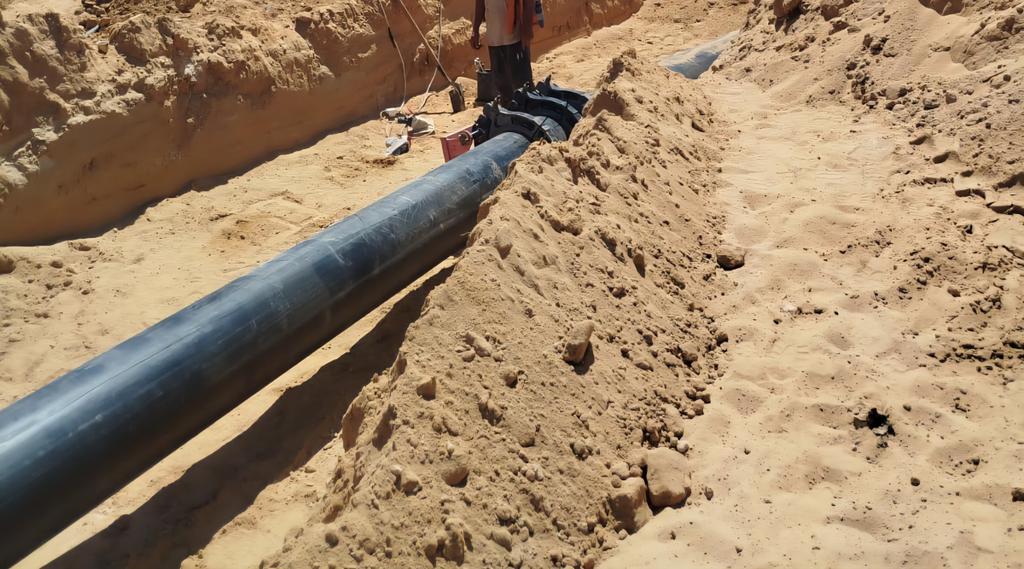
A water pipeline in Gaza. Courtesy: COGAT
But Israel has gone further than simply repairing the existing pipelines. Water pipelines from Egypt have also been built with support from the United Arab Emirates. The Emir Line opened in late August, bringing water from Egyptian desalination plants to al-Mawasi humanitarian zone. That pipeline alone is capable of providing 15 liters of water per day per person for up to 600,000 residents. In addition, Israel has connected power lines to two desalination plants in Gaza (boosting output from 3,500 cubic meters per day to 26,000 cubic meters per day) and coordinated deliveries of fuel for additional desalination plants and water wells.
Coverage of these developments has been sparse. At CNN, the only recent coverage of Gazan water issues involved the network’s Katie Polglase falsely claiming that Israel was responsible for the damage caused to the water pipelines during Hamas’s attack.
2) Hamas Working to Prevent Gaza City Evacuations
Ahead of Israel’s Operation Gideon’s Chariots II, the planned operation to capture Hamas’s stronghold in Gaza City, the Israel Defense Forces (IDF) called on residents of Gaza City to evacuate out of harm’s way. This is standard practice, as noted in the pages of the Washington Post, where urban warfare expert John Spencer discussed similar efforts in battles for Tal Afar, Mosul, and Marawi. As of September 16, it was estimated some 370,000 residents had evacuated the city.
But, like ISIS in Mosul, Hamas has worked to prevent Gazan civilians from leaving the combat zone. The terrorist organization claims, for example, that IDF evacuation calls were actually plots “to exploit the situation for assassinations, arrests, and security traps” or were contributing to Israel’s “expulsion plans.” According to some Gazan residents, Hamas is even stationing operatives on evacuation routes to intimidate evacuees into returning home.
Among Western media outlets, Hamas’s attempt at retaining its human shields has received little coverage. At the BBC, Hamas’s cynical efforts were mentioned only in passing.
3) Iron Beam Goes Operational
Famously, Israel maintains the most sophisticated network of air defense systems in the world. That system just got a game-changing upgrade in the form of lasers: the Iron Beam, otherwise known as Eitan’s Light. This new system, which has already seen use against Hezbollah and during the 12 Day War with Iran, has been declared operational and will begin rolling out for the IDF to deploy by the end of 2025, according to a statement by the Israel Ministry of Defense and Rafael Advanced Defense Systems.
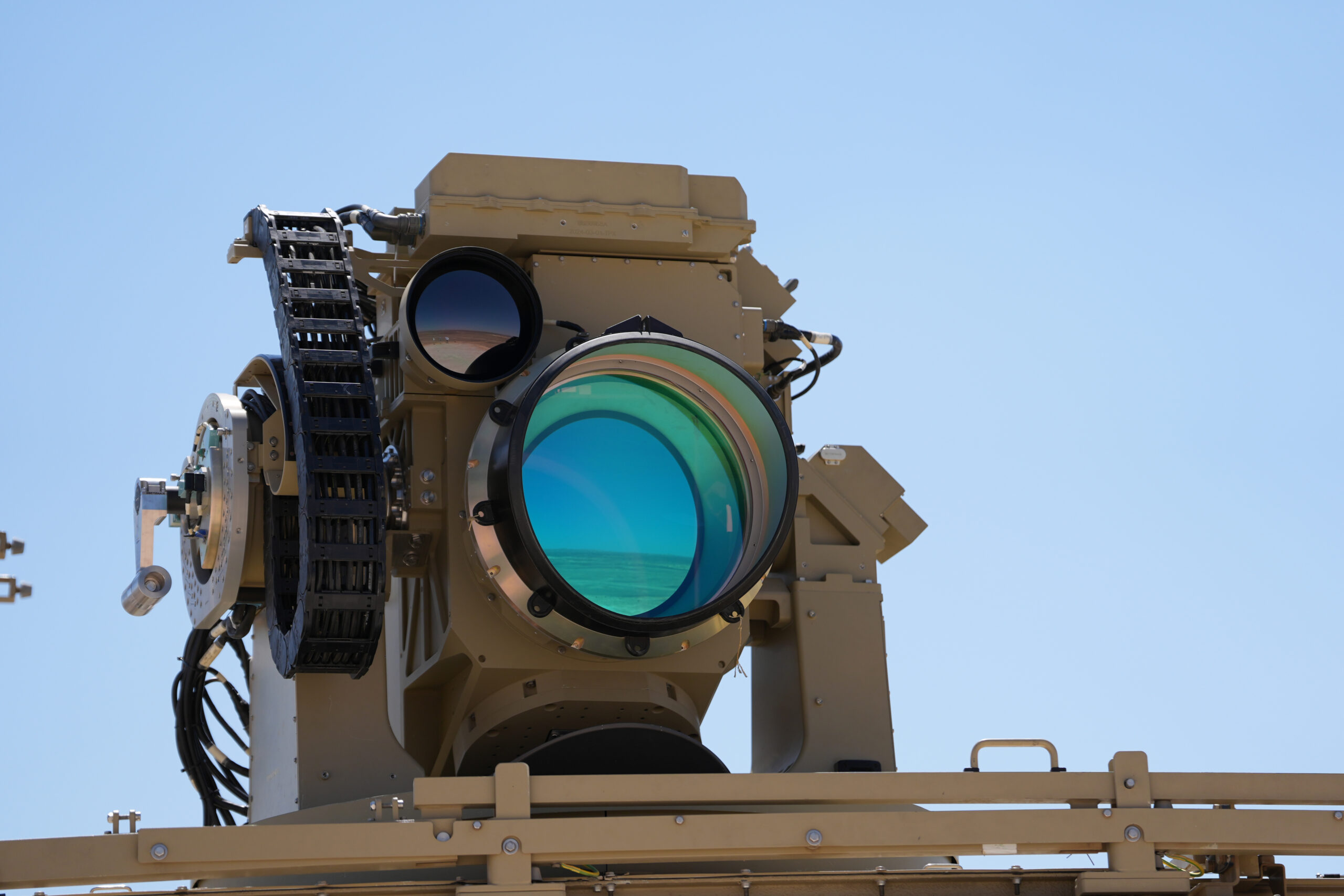
An Iron Beam system. Courtesy: Israel Ministry of Defense and Rafael
Why is this so significant? It comes down to costs.
While Israel’s existing air defense systems are highly sophisticated and effective, they’re also expensive. These systems cost an estimated $1.5 billion during just the 12 Day War with Iran. Interceptors for Israel’s Iron Dome cost approximately $50,000 each. Arrow System interceptors cost several million dollars each. In contrast, an interception via the Iron Beam costs approximately $3 in electricity. The system will be effective against a range of threats, too, including rockets, mortar shells, and drones.
Other than Israeli outlets, Reuters, the Washington Times, the Washington Examiner, and a handful of niche defense industry outlets, Israel’s defense technology innovation has largely gone under the radar.
Historical Context for Current Events
This week, a scandal-ridden United Nations Commission of Inquiry (COI) claimed that Israel was seeking “genocide” in Gaza. (See CAMERA’s response to CNN’s coverage here)
The “genocide” libel is nothing new, however. In June 1982, for example, the Palestine Liberation Organization representative, Zuhdi Labib Terzi, accused Israel at the United Nations of seeking “to eradicate the Palestinians – genocide…akin to the Nazis.” A few months later, at an International Atomic Energy Agency conference, an Arab-Soviet resolution accusing Israel of “genocide” just barely fell short of a two-thirds vote.
In 1980, the estimated Palestinian population was around 4 million, including 1.2 million in the West Bank and Gaza. Today, there are 15.2 million Palestinians worldwide and 5.61 million in the West Bank and Gaza, according to the Palestinian Central Bureau of Statistics.