
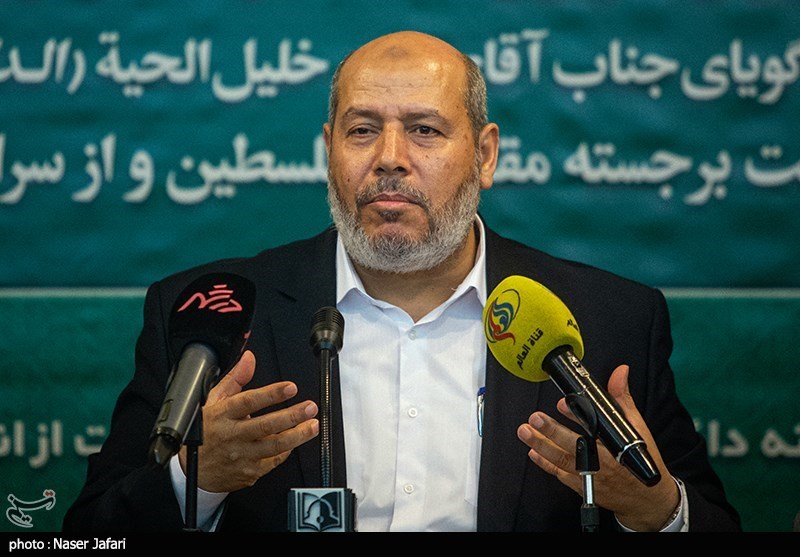
Tasnim News Agency, CC BY 4.0 <https://creativecommons.org/licenses/by/4.0>, via Wikimedia Commons
On September 9, the Israel Defense Forces (IDF) carried out Operation Summit of Fire, a targeted strike aimed at Hamas’s leadership in Qatar. Whether the strike was successful is still unknown. What is immediately apparent, however, is that CNN’s coverage of the strike falls well short of quality journalism.
Consider the network’s September 10 article, “Israel strikes Hamas leadership in Qatar in unprecedented attack. Here’s what to know,” primarily authored by Helen Regan, which is reflective of the network’s broader coverage of the story. Running at over 1,000 words and involving an unusual total of 15 CNN contributors, the article fails readers in two important ways.
First, it fails to ask an obvious and critical question: why was the leadership of Hamas – an internationally designated terrorist organization – openly living in Qatar?
The short answer is that Qatar is a key benefactor for Hamas. So closely aligned are the two that Qatar was one of the only countries to support Hamas’s violent takeover of the Gaza Strip in 2007 when it ejected the Palestinian Authority from the territory. Today, not only does Qatar harbor the terrorist organization’s leaders, but, according to the U.S. Treasury Department, it also has a long history of financially supporting terrorism (and not just Hamas’s). Hamas’s Ismail Haniyeh even reportedly told the Qatari foreign minister in 2019 that Qatar was “Hamas’s main artery” for cash.
This isn’t a minor detail. In 2001, following the 9/11 attacks, the U.S. famously issued an ultimatum to the Taliban – then governing Afghanistan – to “[d]eliver to United States authorities all the leaders of al Qaeda who hide in your land.” As Afghanistan harbored the leaders of the perpetrators of the worst massacre of American civilians, so too has Qatar harbored the leaders of the perpetrators of the worst massacre of Israeli civilians. Many may recall the video showing these same Hamas leaders in Qatar celebrating the October 7 attack even as the massacre unfolded. Indeed, one of those reportedly targeted, Khalil al-Hayya, was among the main architects of the attack.
Don’t host terrorists on your soil.
Israel WILL settle the score. pic.twitter.com/yK3jYRS3am
— Emily Schrader – אמילי שריידר امیلی شریدر (@emilykschrader) September 9, 2025
Qatar’s harboring of and support for these terrorists should have been a major part of any story about the strikes. But instead of holding Qatar’s power to account, Regan’s article depicts Qatar in an entirely positive light. Qatar is “an important US ally” or a “close US ally,” that “has hosted countless rounds of negotiations.” This last point may technically be true, but Qatar has also worked together with Hamas to scuttle U.S.-proposed peace plans in the past.
Which relates to the network’s second major failure in the article: its omission of a critical detail that undermines one of its main narratives, that the strike is, or will be, responsible for “derailing” negotiations. For example, the article claimed that “at the time [of the strike] the militant group said its negotiators were reviewing a recent ceasefire proposal backed by Trump.”
While this may also be true in a technical sense, it was already clear that Hamas was not going to agree to the proposal. Senior Hamas official Bassem Naim had already gone on Arab media to describe the proposal as a “declaration of surrender” for Hamas, a description echoed by other Hamas officials.
While each side blames the other, the reality is that ceasefire negotiations were going nowhere. Like negotiating with bank robbers who take hostages, the purpose isn’t to come to an amicable agreement with the hostage-takers, nor should it be. The purpose is to free the hostages and bring the hostage-takers to justice so they can no longer harm the innocent.
It seems all 15 involved CNN journalists have lost the plot. Yes, Israel carried out a strike on Qatari soil, but why was a “U.S. ally” harboring and supporting a designated terrorist organization that currently holds two American citizens hostage? Yes, killing Hamas’s leadership may disrupt negotiations. But since when do hostage-takers get immunity from the consequences of their actions?
It should raise eyebrows that 15 CNN journalists could not find space in a 1,000+ word article to address either of these two questions.