At the beginning of the week, 16-year-old Libby told the BBC that a man screamed at her that she had committed genocide, CAMERA's Leah Benoz writes in JNS. The BBC spent the rest of the week telling her attacker that the genocide was real.
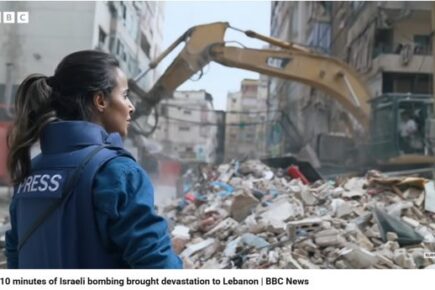
While BBC readers will miss that Israel's north is still under attack, they do get a heavy dose of the broadcaster's false talking narratives including moral equivalency and the baseless claim that Israel targets journalists and healthcare workers.
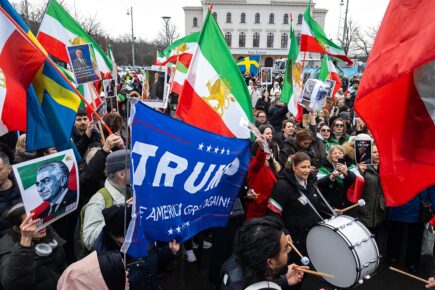
CNN should also know, and have reported on, the threat Iranians face for speaking out against the regime. It is also obvious that no journalist in Iran would be safe reporting on these matters for an American outlet, an act the regime equates with treason.
After the AP initially ignored the death of 11-year-old Nesya Karadi, who succumbed to the wounds she suffered in an Iranian cluster munitions attack, CAMERA prompted coverage that was carried in more than 150 media outlets. All of the fatalities within Israel and the PA-controlled West Bank from Iranian missile attacks have been civilians, underscoring the Iranian regime’s use of cluster munitions in attacks against densely populated residential areas, almost certainly a war crime.
NPR surveyed the damage in southern Lebanon while escorted by a Hezbollah propagandist. Its report ignored Hezbollah's human shield strategy, attacks on Israel and how the terror group's tactics mirror those of Hamas.
The Guardian upheld our complaint, and corrected the opening sentence of an article falsely claiming that Israel "invaded" Lebanon in 2023, while erasing Hezbollah entirely.
Former Department of Homeland Security official Fayrouz Saad spoke with NPR about her family's connection to Bint Jbeil, Lebanon, following the destruction of her family's "ancestral home" there. Referring to the village as quaint, Saad omitted any reference to PLO control at the time her parents left Lebanon or to Hezbollah presence there in the last several decades.