
Both NPR and Rolling Stone recently profiled “Ms. Rachel,” (Rachel Griffin Accurso), the popular American YouTube children’s entertainer, ahead of her debut album’s release. But the toddler titan’s Gaza activism and defensive posture against antisemitism allegations loomed large over both pieces.
Unfortunately, for these outlets, “J” did not stand for journalism.
NPR assigned the interview of a preschool singer to Lebanese-American, former Middle East correspondent Leila Fadel. The interview quickly shifted to Gaza following a perfunctory nod to the album. Despite Fadel’s experience and background, the interview lacked both curiosity and journalism.
Fadel asked Ms. Rachel how it felt to be called names like “antisemitic or Hamas propagandist” – without providing the audience any context about why those descriptors had ever been applied to Ms. Rachel. This teed up Ms. Rachel to avoid the substance of the criticisms and instead offer a pious deflection: that she, God, her family and friends all knew her heart and her “deep care for all children exactly equally.”
Actor and podcast host Jonah Platt analyzed Ms. Rachel’s 683 Instagram posts from Oct. 7, 2023, through Mar. 16, 2026. Ms. Rachel did not mention the word hostages for 451 days after Oct. 7. He noted that while she posted about Sudan eight (8) times, three of which were partnership posts, the word Gaza appeared in 234 (roughly one-third) of her posts – all of which had open comments. (By contrast, in her 13 posts sympathetic to Jews or Israelis, all had comments turned off.) At her peak in August 2025, 82% of her posts were about Gaza, “Palestine,” “genocide” or the Israeli government. Platt also highlighted that many of her posts invoked anti-Zionist libels and Hamas talking points.
The only thing she posted on Oct. 7, 2023, was about having messy mom hair. 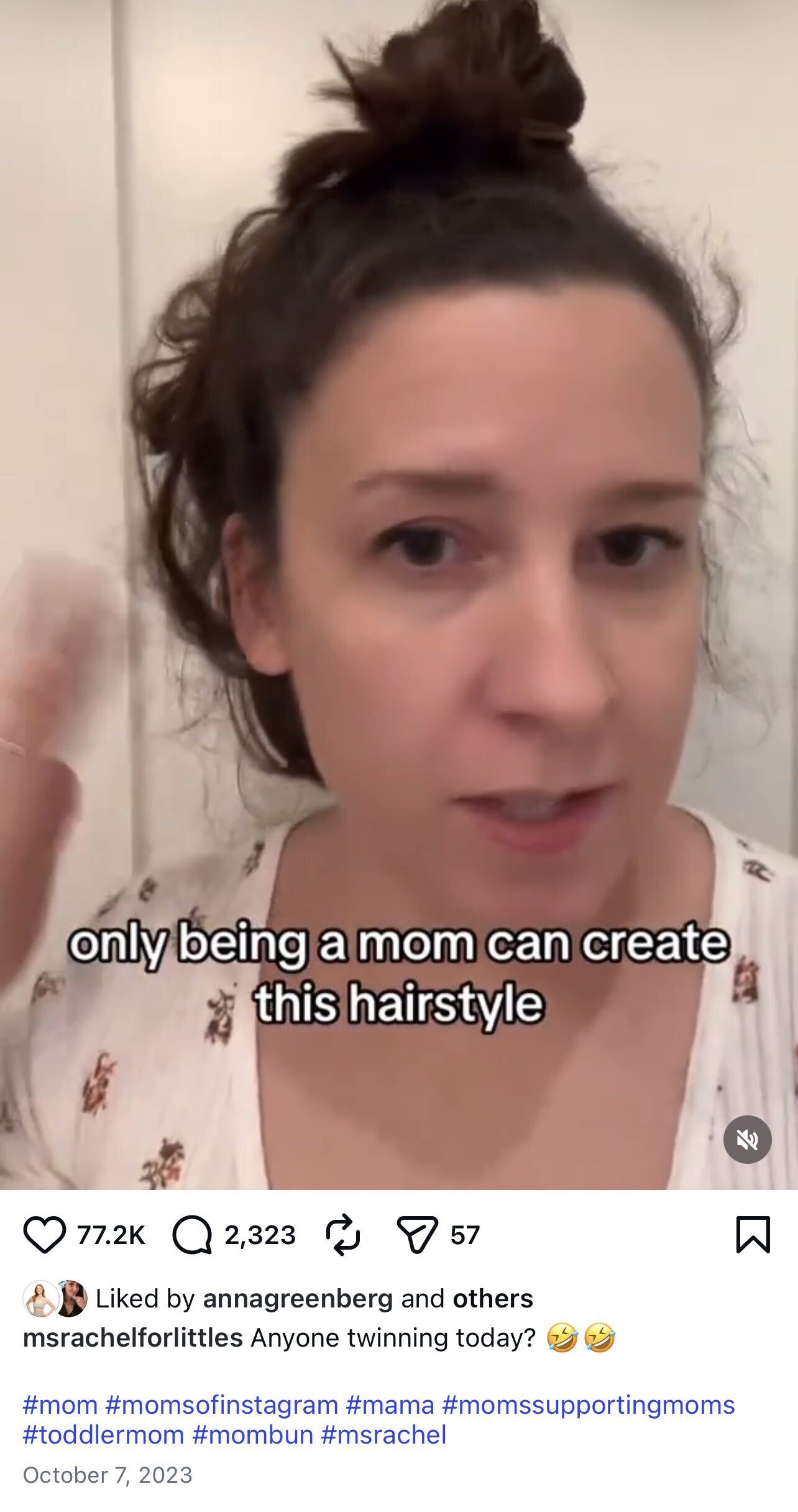
In mid-July 2025, Ms. Rachel taught her toddler audience the letter “M” by introducing them to her Hamas propagandist friend, Motaz Azaiza. Over a year earlier, Azaiza wrote on his Instagram account (which has more followers than the number of Jews on earth), that he did not believe Hamas’ atrocities on October 7 should necessarily be condemned. He also said one Palestinian was more important than 1,000 Israelis. In Rolling Stone, Ms. Rachel’s collaboration with Azaiza was referenced, except the magazine only revealed he had described Israel as a “terror state.” Neither outlet mentioned Azaiza’s Hamas support nor any examination of why Ms. Rachel was “accused of platforming an antisemitic voice in the movement.”
Neither NPR nor Rolling Stone reported that Ms. Rachel deleted her video with Azaiza in July 2025. Nor did they disclose that shortly before their recent publications, Azaiza acknowledged in an Arabic-speaking podcast that Hamas controlled all journalist discourse out of Gaza, he had been a Hamas supporter, had friends in Hamas, supported the killing of Israelis and deliberately hid film he took of Gazans hitting and spitting on kidnapped Israelis.
Addressing antisemitism allegations, Rolling Stone, but not NPR, mentioned Ms. Rachel “accidentally” liked a comment on her Instagram post that said, “Free America From the Jews.” Rather than acknowledging the impact on her Jewish audience, she tearfully claimed she made a mistake and blamed it on hitting “like” instead of “delete.” After issuing the video “apology,” an anti-Israel account commented that Jews planted the comment to frame Ms. Rachel. Ms. Rachel then commented “ooooooohhhh” – sowing doubts about her sincerity. To add insult to injury, she pinned that comment to the top of the apology video, later (again) blaming her inability to properly manipulate Instagram.
Notably, neither NPR nor Rolling Stone cared to delve into why Ms. Rachel had been accused of antisemitism.
In Rolling Stone, Ms. Rachel is made out to be a saint, asking, “Why do people hate that I don’t want kids to be killed and starved?” The bad-faith question positions her as the “good one” whereas her Jewish critics are framed as the “bad ones.”
This was also not the first time NPR discussed Ms. Rachel’s Gaza advocacy for Palestinians. Previously, in a May 2025 episode of It’s Been a Minute called, “Why can’t we (or Ms. Rachel) talk about Gaza’s children dying?” Brittany Luse, a cultural critic, hosted Samer Kalaf from Defector and Mona Chalabi from The Guardian to discuss the issue.
Luse reported (as did Rolling Stone) that in April 2025, StopAntisemitism asked the Department of Justice to investigate whether Ms. Rachel was being paid by Hamas, an allegation she denied. The trio believed there existed a “consistent playbook” to discredit pro-Palestine voices by alleging Hamas support or funding. Chalabi said Ms. Rachel was right to speak up for Gaza’s children because they were being “systematically starved,” [a lie] and because schools had been bombed and teachers killed. Of course, there was no acknowledgment of Hamas’ weaponization and infiltration of schools in Gaza or its hoarding of aid.
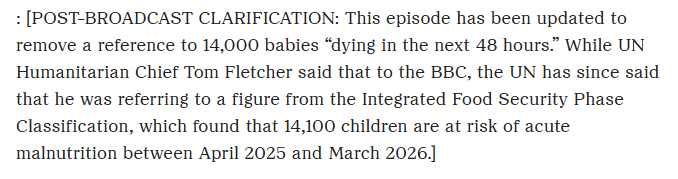
In an ironic twist, NPR was forced to issue a rather embarrassing post-broadcast clarification of the May episode. Accordingly, it removed mention of U.N. Chief Tom Fletcher saying that if aid was not restored to Gaza, 14,000 babies would die in 48 hours. (Ms. Rachel deems the anti-Israel U.N. infallible, however. Rolling Stone explained that “she . . . only share[s] statistics shared by verified sources, like the United Nations” and that she cannot engage with people who do not believe the U.N.)
In today’s media landscape, journalists should be doing research and asking hard questions. With Ms. Rachel, NPR and Rolling Stone preferred instead to engage in coddling and child’s play.