
In a June 29 headline and article, The New York Post wrongly alleges that “Lebanon” says it will not honor the ceasefire agreement brokered by the United States and signed June 26 by both Israel and Lebanon (“US-brokered peace agreement with Israel ‘will not be implemented’ after Hezbollah rips up ‘humiliating’ deal: Lebanon“).
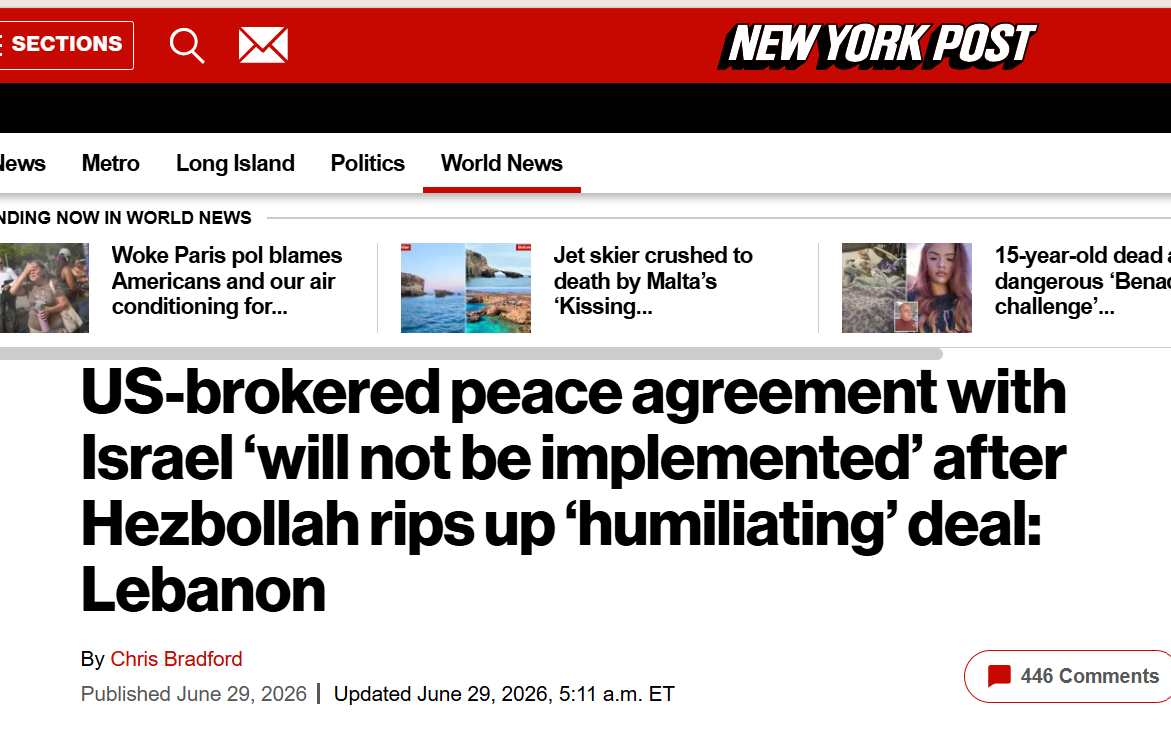 The article, echoing the headline, misattributes the rejectionist remarks to “Lebanon,” wrongly equating parliament speaker Nabih Berri with the government at large:
Lebanon vowed Monday that the US-brokered peace agreement with Israel “will not be implemented”— just days after Hezbollah ripped up the deal, declaring it “null and void” as well as “humiliating.
Nabih Berri, the country’s parliament speaker and an ally of the Iranian-backed Hezbollah terror group, delivered the stinging rebuke about the deal just three days after it was signed in Washington, DC. [Emphasis added.]
Parliament speaker Nabih Berri, a Hezbollah ally, is not tantamount to “Lebanon,” which is ruled by a sectarian power-sharing structure including three key government positions of president, prime minister, and speaker split between a Maronite Christian, a Sunni Muslim, and a Shia Muslim.
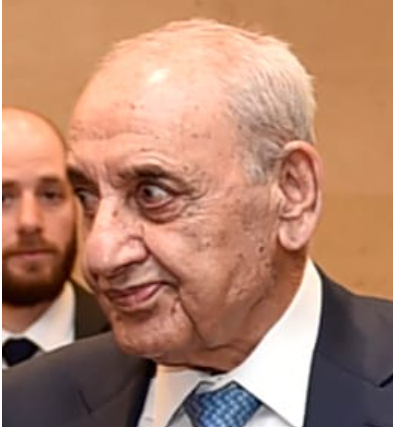
Parliament Speaker Nabi Berri, a Hezbollah ally (Photo by Foreign, Commonwealth & Development Office, CC BY 2.0, via Wikimedia Commons
Notably, Reuters, which also reported Berri’s remarks (and was perhaps the basis for Chris Bradford’s Post article which acknowledges “with wire reports”), rightly specifies in its headline that a senior Lebanese official, and not Lebanon, made the anti-deal comments: “Senior Lebanese official slams US-brokered deal with Israel, warns of divisions.”
Reuters accurately reports:
Lebanon’s Parliament Speaker Nabih Berri, a key ally of Hezbollah, on Monday slammed a U.S.-brokered agreement between Lebanon and Israel, warning it could lead to attempts to divide Lebanese and said it would not be implemented. …
In comments to Lebanon’s al-Akhbar newspaper, Berri described Iran-U.S. talks as the only realistic opportunity to secure Israeli withdrawal from Lebanon and that any attempt to separate Lebanon from the U.S.-Iran track would prolong Israeli occupation.
Berri, head of the Amal Movement, described the agreement as “diktats”. Al-Akhbar quoted Berri as saying the most dangerous aspects of the agreement included “the potential for it to incite internal divisions and draw the Lebanese into a confrontation among themselves”.
The agreement “won’t be implemented”, al-Akhbar cited him as saying.
Regarding the government’s position on the deal, Reuters reports:
The Lebanese government sought face-to-face talks with Israel early in the war despite objections from Shi’ite Hezbollah, reflecting divisions over the group’s decision to join the conflict.
The government has pursued a policy aimed at securing Hezbollah’s disarmament since last year, after the group was badly weakened during a previous war with Israel in 2024.
CAMERA has contacted The Post, urging editors to amend the headline and first paragraph of the article to make clear that a Lebanese official and not “Lebanon” said the deal will not be implemented. Stay tuned for any updates.