
Human-interest stories are a legitimate, and often powerful, way to report on world events. But they cannot be immune to fact-checking. If anything, the emotional nature of such stories demands even greater caution in how the factual claims therein are treated.
At this, the IndyStar and the South Bend Tribune failed in a Nov. 4, 2026 article by Deanna Watson (“Indiana OB/GYN’s life changed by time delivering babies in Gaza”), relaying the account of physician Thalia Pachiyannakis about her three weeks at Nasser Hospital in the Gaza Strip.
“There was no Hamas at the hospital,” Pachiyannakis told Watson. “The whole time I was there, I never saw them. No tunnels, none of the stuff you hear about in the media,” she continued.
Perhaps Pachiyannakis honestly never saw anything. But the IndyStar nonetheless has a journalistic responsibility to provide its readers with the facts.
The closest Watson gets to providing its audience with the rest of the story is when she references an Aug. 25, 2025 incident in which, according to IndyStar, Nasser Hospital “was bombed, killing 22 people…including five journalists.” Watson provides that “Israeli officials stated at the time that the military launched a drone attack on what was believed to be a Hamas camera positioned at the medical facility…”
In addition to a material omission, the context given manages to get the same fact wrong in two different ways. The hospital was not “bombed,” nor did the IDF ever claim to have “launched a drone attack.” Rather, the Israeli forces used tank fire.
If the journalist can’t get this straightforward fact correct, one wonders about the credibility of everything else written.
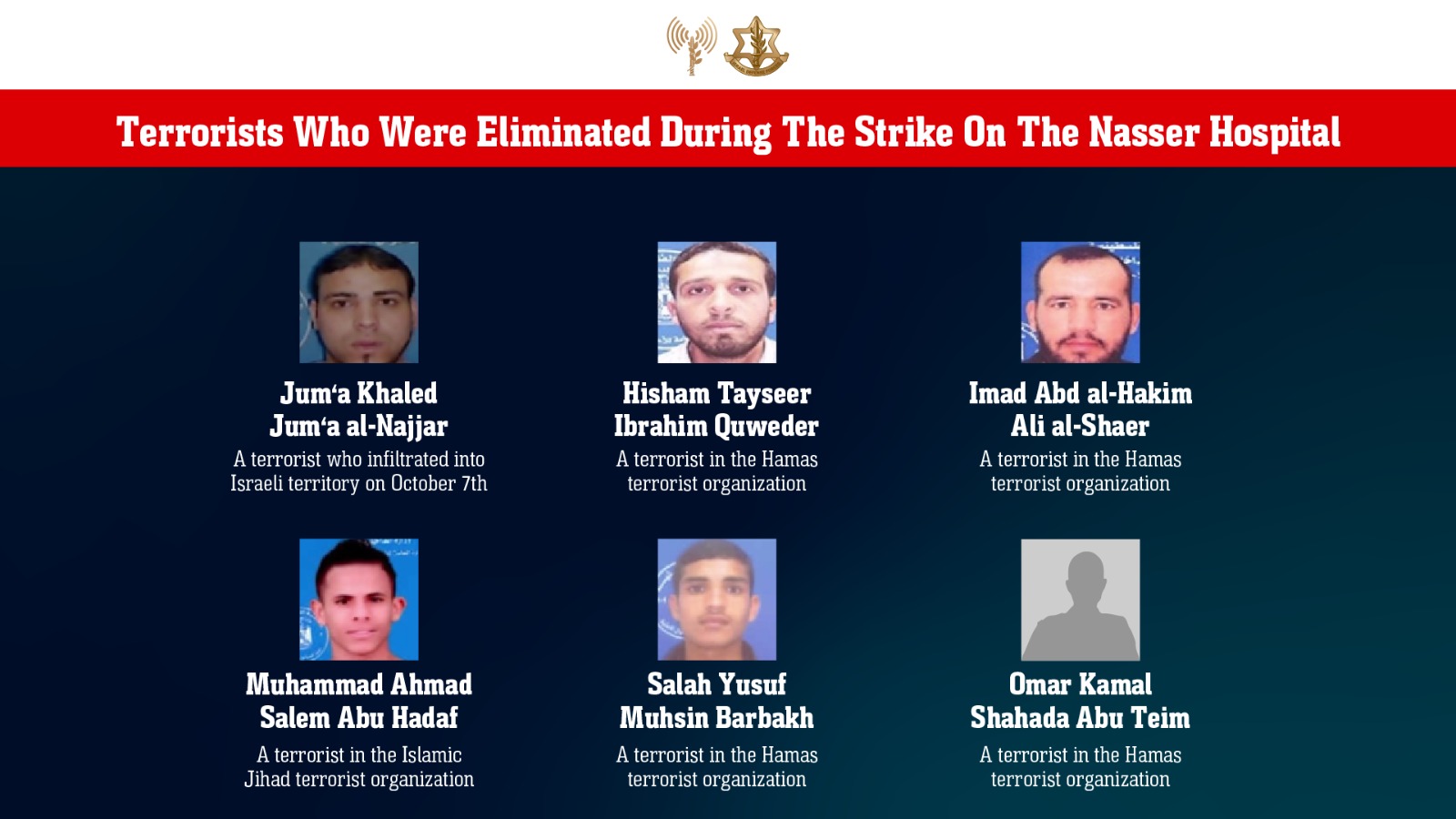
An IDF infographic listing six terrorists eliminated in the August 2025 strike.
The material omission is that of those killed, at least six were identified by name as terrorists, including Jum’a Khaled Jum’a al-Najjar, who participated in the Oct. 7, 2023 massacre in southern Israel. Either the Israeli tank just got very lucky, or there’s something to Israeli claims that Hamas is exploiting hospitals and putting the patients and staff in danger.
If, in the very next paragraph, Pachiyannakis is given space to deny ever seeing Hamas at the hospital, then her statement should be measured against such contradictory evidence.
In fact, the evidence of terrorists using Nasser Hospital extends well beyond the six eliminated in August 2025. The evidence also comes not only from Israeli sources, but from unfriendly non-governmental organizations and local Palestinians. Consider the following:
- Ada Sagi, an Israeli hostage taken during the Oct. 7 attacks, told the BBC that she spent part of her captivity at Nasser Hospital. Referring to the hospital staff, she said: “People say that they are not involved. They’re involved… and getting money for each of us.”
- A rocket was fired from the hospital compound in January 2024.
- During an operation in February 2024, Israeli forces found sealed boxes of medicine with the names of hostages that was supposed to be provided to them as part of a deal brokered by France and Qatar.
- Over 100 terrorists were found at the hospital during the operation, including more than 20 who participated in the Oct. 7 massacre.
- Large quantities of weapons, including some in a vehicle used by Hamas in the Oct. 7 massacre, were located in the hospital during the operation.
- In December 2024, the Palestinian Authority reported that Hamas was using Nasser Hospital for “summonses, interrogations, and extortions,” providing an image of one such summons.
- Multiple prominent Hamas terrorists have been located and killed at Nasser Hospital during the course of the war, including Hamas’s finance chief Ismail Barhoum, Hassan Eslaiah, and Brigadier General Ahmed al-Qudra.
- During June 2025 clashes between Hamas forces and a Palestinian clan, locals reported that Hamas fighters used Nasser Hospital as a stronghold, including a Hamas sniper located on the roof who shot a 16-year-old boy.
- In November 2025, Ahmed Fouad Alkhatib, a Palestinian and senior fellow at the Atlantic Council, relayed a report from a friend who was taken by Hamas to a torture center located in Nasser Hospital alongside a dozen other Gazans.
- Additional reports from Palestinian activists refer to Hamas using Nasser Hospital to summon residents for recruitment
- In January 2026, Doctors Without Borders suspended non-urgent medical activities at Nasser Hospital over the presence of “masked armed men” and “suspected movement of weapons.”
It is one thing to run a human-interest story, and even to report the subject’s claims. But basic ethical considerations and journalistic responsibility demand readers be given the information necessary to judge the credibility of her claims.
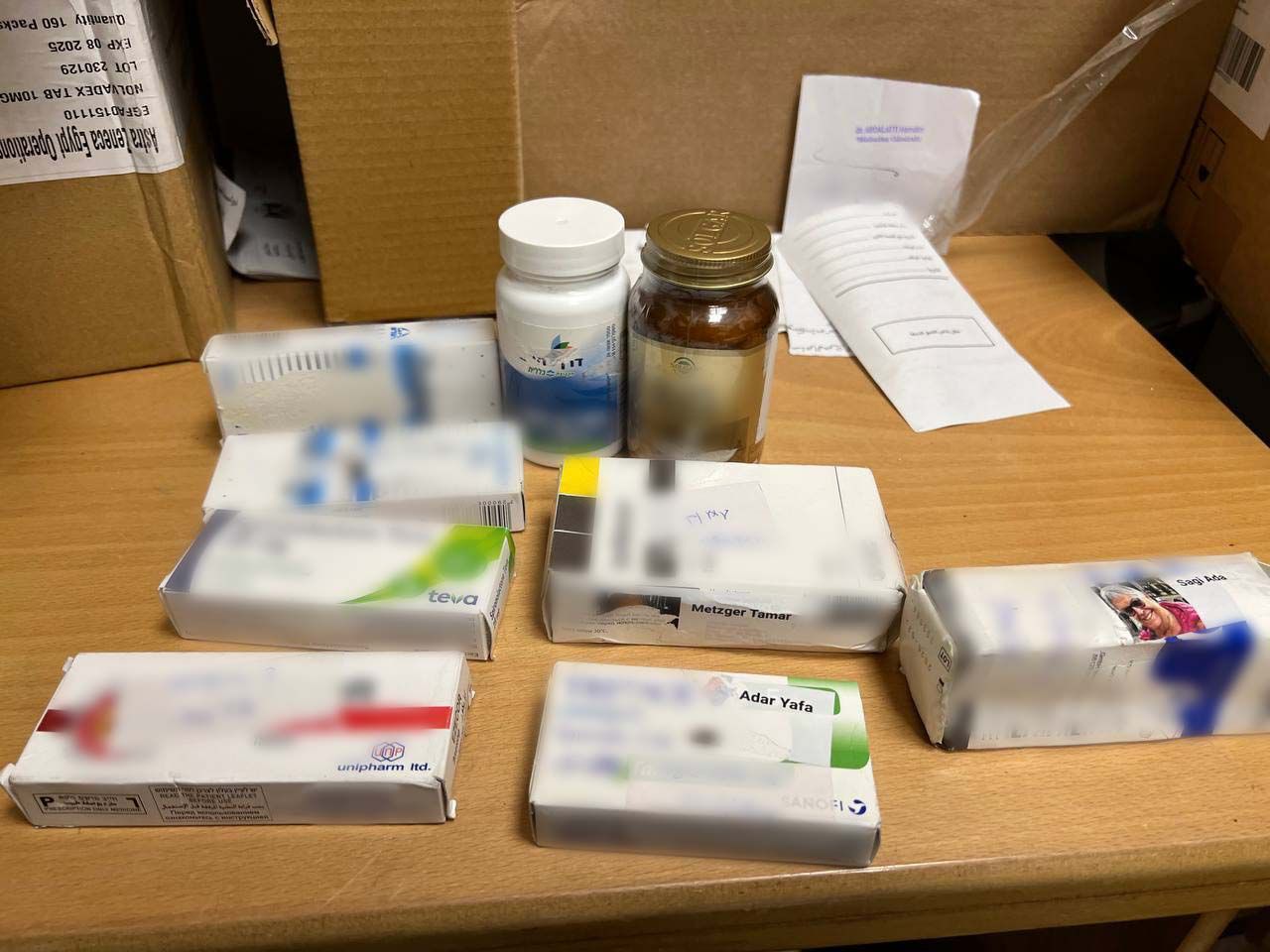
Medications meant for Israeli hostages were found at Nasser Hospital in February 2024.
Pachiyannakis claims she did not see terrorists at the hospital. But many sources contradict the implied conclusion that Hamas does not use Nasser Hospital. Hamas, as a de facto authority in the territory, must be held to account. By failing to do so, media outlets like IndyStar are only putting Gazan civilians, subject to Hamas’ cynical strategies, in greater danger.