In March, the New York Times asserted that Israel played an outsized role in the White House's decision to go to war with Iran. But in June, the publication claimed that it was mere "perception" that Israel dragged the U.S. to war. What changed? Does The Times know the facts?
Perhaps Moaveni does not touch on any of Iran’s countless aggressions because even she cannot justify them, so she decides that it is best not to remind readers of the list.
A New York Times columnist claimed there is an "emerging global consensus" for a one-state solution to the Israeli Palestinian conflict. Easily accessible overwhelming evidence shows otherwise.
In the lust libels alleging Israel’s use of widespread rape and sexual assault, every lurid lie is fit for print and worthy of the public consciousness, however ludicrous or unsubstantiated, CAMERA's Tamar Sternthal writes in JNS. Nothing is unspeakable.
The New York Times is using anonymous sources in its reports on key events in the US-Israel-Iran war. This leads to some incredible reporting, and not necessarily in a good way.
Trust in journalism is at an all-time low because journalists are debasing their own noble profession, CAMERA's David Litman writes at JNS. Journalists should be the first to challenge the dishonesty in Nicholas Kristof's piece alleging systemic sexual abuse of Palestinian prisoners.
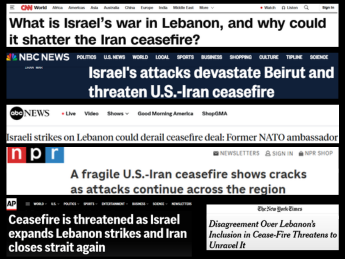
Following the April 8, 2026, U.S.-Iran ceasefire, major western outlets manufactured a false narrative accusing Israel of violating the deal based on unconfirmed claims from Tehran and Islamabad.
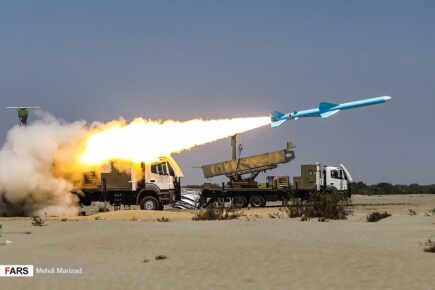
When it comes to Iran’s missile launchers, some may be entirely useless, damaged but repairable, or currently operational. There are myriad ways a launcher with little-to-no visible damage might no longer be functional. But the average intelligence analyst will count it as part of Iran’s launch capacity.