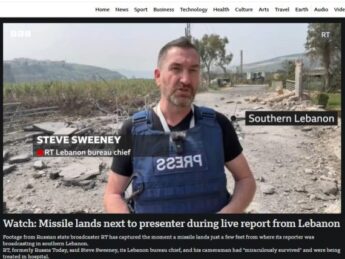
While BBC readers will miss that Israel's north is still under attack, they do get a heavy dose of the broadcaster's false talking narratives including moral equivalency and the baseless claim that Israel targets journalists and healthcare workers.
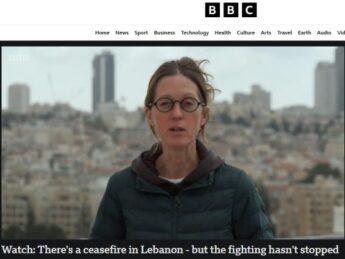
Did Hezbollah accept the Israel-Lebanon ceasefire or reject it? Is the terror group willing to abide by its terms or is it refusing to disarm? BBC can't seem to decide.
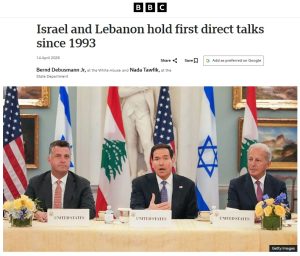
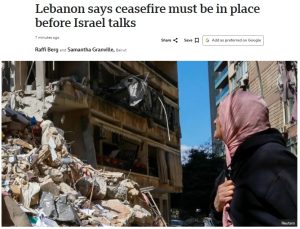
BBC audience understanding of the upcoming talks between Israel and Lebanon – and any future developments – would of course be greatly enhanced were the corporation to focus less on framing of the story and actually provide information concerning the stance of the terrorist organization that brought about the need for them in the first place and is apparently intent on ensuring that they do not succeed.
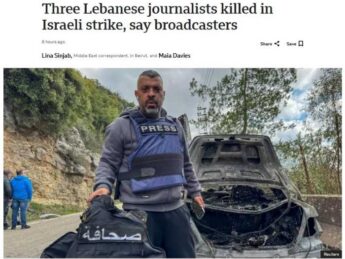
When media and advocacy organizations serially fail to challenge those who exploit the profession for the purposes of terrorism, they undermine its very foundations and compromise public trust in journalism in general. Adopting that stance is especially damaging to BBC credibility, but the corporation continues to embrace that editorial policy.
Having the BBC’s costly “anti-disinformation” department provide uncritical worldwide amplification for that already viral Russian propaganda would hardly seem to the be the best way to convince its funding public that the corporation has a “critical role” to play in providing “access to reliable information.”