In the 15 years we’ve been monitoring British media coverage of Israel, a March 29 segment by Sky News’ Alex Crawford denying the Hezbollah affiliation of a “journalist” killed in Lebanon represents one of the most egregious examples we’ve seen of a mainstream outlet actively promoting the PR messaging of a proscribed terror group.
While American news outlets obsess over bashing the American and Israeli administrations for striking Iran as well as their conduct during the war, Iran is portrayed as a victim of Western aggression, rather than as the top state sponsor of terror that has long oppressed its own people.
NBC's recent reporting on Lebanon had various layers of bias, including buried facts, omitted facts, and wrong information. The result was a lack of accuracy, balance and context.
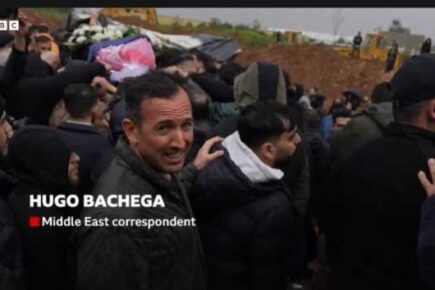
The BBC displays a troubling pattern of seeking to establish a narrative that supports its long-standing chosen framing of Israel’s responses to attacks by terrorists, while sidelining the issue of the abuse of the journalistic profession by groups such as Hamas and Hezbollah and legitimizing the media arms of terrorist organizations.
Home is where the heart is, but in Israel, it’s also where the war is. Writing between missile attacks from her home in central Israel, CAMERA's Tamar Sternthal describes in The Washington Examiner how Iran and its terror proxies deliberately target the Israeli homefront in their doomed effort to eliminate the Jewish state.
The Guardian's Jonathan Liew argued that criminal vandalism against the bakery chain Gail's, which was once owned by Israeli Jews and had the audacity to open a branch near a Palestinian-owned cafe, is understandable "petty symbolism." Britain's Jews have faced a tsunami of hatred since the October 7 attack, but even for the Guardian, this may be a new low.
One certainly wonders whether anyone within the FT editorial chain of command so much as raised an eyebrow at Ghattas’ legitimization of the absurd propaganda of the proscribed Islamist terror group.
When media and advocacy organizations serially fail to challenge those who exploit the profession for the purposes of terrorism, they undermine its very foundations and compromise public trust in journalism in general. Adopting that stance is especially damaging to BBC credibility, but the corporation continues to embrace that editorial policy.
While we do not yet know the names of those responsible for this latest attack, we do know the rhetoric and actions that are creating these fears and security concerns. The BBC however, while content to point fingers at Israel, does not seem to want to name them.