
On May 12, 2026, The New York Times reported that U.S. intelligence assessments believe Iran retains most of its military capabilities. This revelation follows a series of similar intelligence leaks to the press, each of which omits a key point: These are isolated assessments from specific agencies, not raw data, and are likely to be wrong.
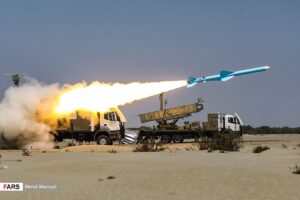
Fars Media Corporation, CC BY 4.0, via Wikimedia Commons
Adam Entous, Maggie Haberman, and Jonathan Swan wrote in “U.S. Intelligence Shows Iran Retains Substantial Missile Capabilities” that “Iran still fields about 70 percent of its mobile launchers across the country and has retained roughly 70 percent of its prewar missile stockpile, according to the assessments.” CNN, The Washington Post, and other outlets have published similar stories.
Does this mean that Iran retains 70 percent of its prewar launch capacity? No.
Admiral Bradford Cooper, the head of CENTCOM and the most senior military official commanding the war, told Congress on May 15 that these reports were “not accurate” and that Iran retains “a moderate, if not small, capability to continue strikes.”
Cooper also mentioned that Iran had lost 90 percent of its industrial capacity. This means that it will take a long time for Iran to replenish its lost inventories and will have to husband its munitions for the time being to retain future deterrence. Negative media reports based on anonymous intelligence leaks never mention the damage to Iran’s industrial capacity.
The difference between raw intelligence and the final report is key. Intelligence agencies use different pieces of information, such as eavesdropping, contacts within a foreign government, heat signals, and satellite imagery to gather information. The final product is the conclusions the agencies make based on all that information.
Seasoned government officials are known to be skeptical of the final reports, and many of them routinely ask to examine the raw data instead. In all likelihood, Cooper and the intelligence experts are all looking at the same raw intelligence, but reaching different conclusions, and there is no certain way to know which camp, if either one, is right.
To illustrate, consider a strike on a mobile missile launcher. A post-strike image of the launcher is raw intelligence. But whether the image shows that the launcher has been effectively disabled or not is a matter for U.S. intelligence officials to assess. A plethora of reasons might exist for reasonable minds to come to different conclusions based on the same picture. This brings us to a second issue.
There are 18 different intelligence agencies in the U.S. government, each with distinct methodologies. But, as a general rule, they are known to be cautious, or pessimistic, in their damage estimates. Unless a target is blown into smithereens, agencies are likely to count it as a part of the adversary’s capacity, even if they might not be at all usable or require repair to use again.
For example, the Gulf War Air Power Survey found that intelligence analysts had underestimated the damage to Iraq’s armored forces because “the visible pieces of debris left from a catastrophic explosion were sometimes so small and scattered as to make imagery confirmation of the ‘kill’ difficult even in the best of circumstances.”
When it comes to Iran’s missile launchers, some may be entirely useless, damaged but repairable, or currently operational. There are myriad ways a launcher with little-to-no visible damage might no longer be functional. But the average intelligence analyst will count it as part of Iran’s launch capacity.
The article adds that “Iran has regained access to roughly 90 percent of its underground missile storage and launch facilities nationwide, which are now assessed to be ‘partially or fully operational’ the people with knowledge of the assessments said.”
This is, again, an incomplete and inevitably misleading picture. It does not disclose what percentage is “partially” operational. How partially operational are those facilities—mostly or minimally? This matters tremendously. If only 50 percent of Iran’s launch sites are operational at 50 percent capacity, that means Iran has lost 75 percent of its prewar capacity right there. But if 90 percent of sites are 90 percent operational, that means that Iran has lost only 19 percent of prewar launch capacity. But the article only mentions that Iran has restored operational access to 30 out of 33 missile site near the Strait of Hormuz, omitting their operational capacity and the number of other sites used for attacks on U.S. installations outside the Persian Gulf region and Israel.
Even if the launch sites are still operational, how many missiles remain intact and accessible overall and specifically for those operational launchers? Launch sites and mobile launchers are useless without a working missile to shoot.
Notably, the assessment partially relies on intercepted Iranian conversations. But it is questionable whether those conversing have an accurate assessment themselves, considering the short amount of time they’ve had to assess the damage and the reported chaos inflicted on regime communications, logistics, and leadership.
Unfortunately, the reporters neither probed the leakers about these nuances nor explained them to their audience.
Leakers typically have their own agenda. Good national security reporters should always be skeptical, given the political environment and their inability to access potentially contradictory—but secret—evidence.
Even absent political motives, these conclusions often rely on someone at a desk looking at a satellite image, wondering whether the thing they are looking at still works or not. They could very well reach the wrong conclusion. Journalists should start being more honest about this with their readers.