
Famously, the slogan “All the News That’s Fit to Print” graces the front page of every New York Times edition. The slogan was coined at the end of the 19th century by the paper’s publisher, Adolph Ochs. Of course, in today’s hyper-globalized world, the slogan is wishful thinking. No paper could realistically cover all the important news stories of the day.
Still, it would be hard to argue that outlets like the New York Times, the Washington Post, CNN, and others adequately cover even those stories they do print. They often devote precious space to emotive or opinionated claims, while omitting highly material and relevant information that sheds important new light.
Provided below are three important, but underreported, stories from the week bearing on Israel and the Middle East that media consumers should know.
1) Defense Deals with Germany, India, and Thailand
Israel’s defense industry continues to thrive despite persistent efforts by anti-Israel activists to disrupt it. This week marked the “initial operational capability handover” of the Arrow 3 system, manufactured by Israel Aerospace Industries (IAI), to the German military.
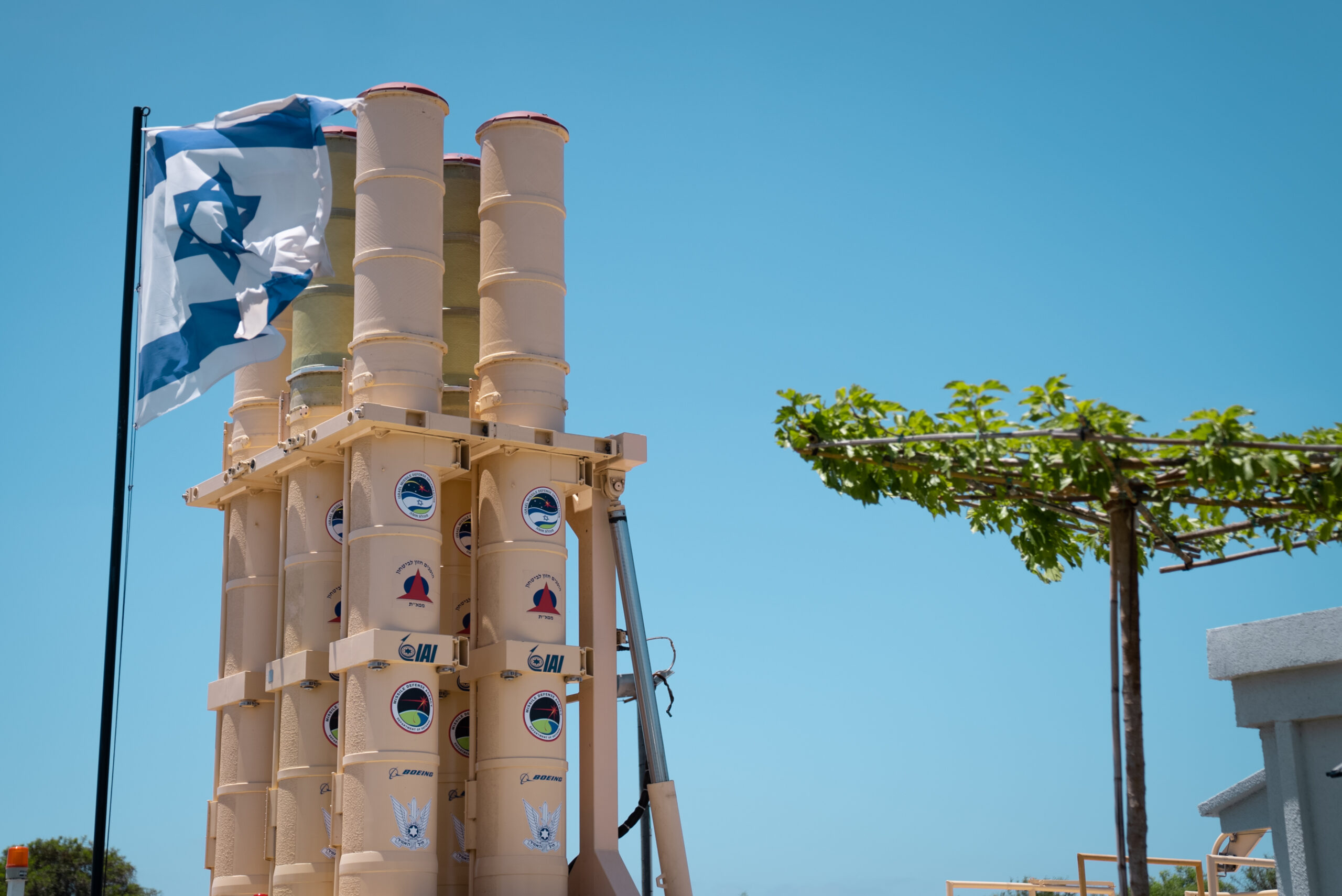
A missile defense system in Israel.
Meanwhile, India “initiated the procurement of more Israeli Heron MK-II drones under emergency provisions invoked after Operation Sindoor…” The drones will reportedly be manufactured in India through partnerships with Indian companies. And in Thailand, the government selected IAI’s BARAK MX air defense system for a procurement contract valued at $107 million. Another deal, signed a couple of weeks ago, involves an unnamed country and is valued at up to $2.3 billion.
Among major Western outlets, only AP News, Bloomberg, and Business Insider covered the Arrow 3 handover to Germany.
2) Israeli Women Volunteering at Record Rates for Combat Units
Hamas weaponized sexual violence on and since October 7. Now, Israeli women are volunteering in unprecedented numbers to fight against the terrorists. Newly released data shows that this summer saw “the highest percentage ever of female recruitment to combat roles” in the Israel Defense Forces.
Among the units with the highest recruitment of women is the Artillery Corps, where actual recruitment exceeded expectations by more than a third. Other combat roles—infantry forces, border guards, and search and rescue—also saw higher-than-expected numbers. No major Western outlet has reported on this development.
Historical Context for Current Events
Tomorrow (Dec. 6) marks the eighth anniversary of the United States’ recognition of Jerusalem as the capital of Israel. Many “experts,” pundits, and journalists predicted disaster at the time. In The New Yorker, Robin Wright called it a “diplomatic bomb” and repeatedly cited Palestinian leaders to suggest the move “destroyed not only the chances of any peace but the stability and security of the region as a whole” (quoting Hanan Ashrawi). CNN’s Christiane Amanpour invited Palestinian negotiator Saeb Erakat to repeat the same argument: “President Trump just destroyed any possibility of a two-state (solution).”
On ABC News, Georgetown University academic and Middle East Studies Association president Judith Tucker claimed the move “makes the prospect of the U.S. playing an instrumental role as a ‘fair broker’ in any future Middle East peace agreement ‘ring very hollow.’” At Brookings, Khaled Elgindy argued the move would cause “irreparable damage to American interests.” Former CIA director John Brennan insisted it would “damage U.S. interests in the Middle East for years to come and will make the region more volatile.”
The wisdom of America’s foreign-policy intelligentsia proved lacking. Apart from a few violent but relatively minor protests, the Middle East largely shrugged. Less than two years later, the same administration brokered normalization agreements between Israel and several Arab states—now known as the Abraham Accords. Today, the United States is playing a stronger role than ever in Middle East peace talks, having successfully pushed a groundbreaking UN Security Council resolution and leading the “Board of Peace,” which will help guide the Gaza Strip toward reconstruction and political reform once Hamas is disarmed and demilitarized.