NPR eschewed good journalistic practice and the use of empirical evidence in favor of wholly unsupported, alleged anecdotal evidence. The result was a podcast that demonized Israelis.
NPR went on a gaslighting blitz when it pretended that journalists out of Gaza aren't under Hamas control (including their own reporter there) and failed to acknowledge to its audience how many "journalists" in Gaza were outed as terrorists.
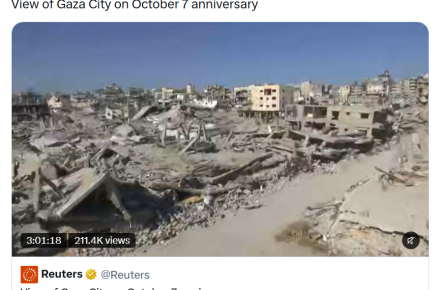
On the third anniversary of the Oct. 7 attacks, many major media outlets focused on Palestinians and Gaza, or the upcoming Israeli elections, instead of Israeli grief and commemoration.
NPR and Rolling Stone interviewed Ms. Rachel, the popular children's YouTube entertainer, in advance of her first album's debut. Her sideshow activism for Gaza dominated the interviews, but Ms. Rachel was asked no hard questions. Sadly, she taught neither outlet that "J" is for "journalism."
NPR misled its audience when it edited out critical portions of Israeli Defense Minister Israel Katz's remarks, twisting his words into something nefarious.
The Associated Press and NPR framing of Israel as an isolated pariah or the Wall Street Journal's framing of the Jewish state as great and powerful reflects the anti-Jewish tropes that have been popularized through the ages.
Multiple levels of hearsay now suffices for reporting, according to NPR. In lowering its standards, it repeated false statistics that it did not bother to fact-check.
Twice in the last several weeks, NPR described the "West Bank" as Palestinian territory, despite the fact that it is widely supported and understood internationally that exact borders will be determined in final status negotiations. NPR ignored CAMERA's multiple requests for correction.
Have you read about: Michigan's history of political antisemitic harassment and intimidation; more proof that the Gaza famine never was; and Ireland's flying blind hatred of Jews?