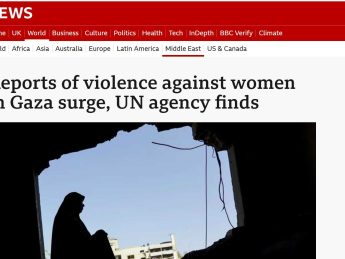
A serious examination of violence against Palestinian women should be capable of examining both the circumstances which make women vulnerable and the agency, choices and beliefs of those who exploit that vulnerability. The BBC's report overwhelmingly examines the former, Palestinian women deserve journalism willing to examine the latter too.
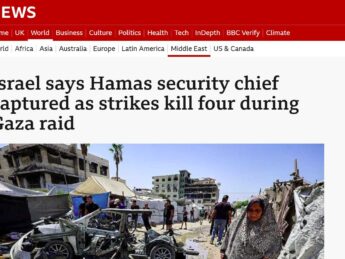
There is a key issue upon which Knell is completely silent; the question as to why such a senior military figure was even present in such a densely populated civilian area in the first place. This illustrates with perfect clarity a key issue the BBC must address, and a new rule which must be added to BBC guidelines, not to protect Israelis, but to protect Palestinians, and any other population which may have the misfortune to discover that their deaths have become politically useful to one party or another in any armed conflict.
The BBC has duties to its audience, set down in clear editorial guidelines. The pressing question is why does it continually break them on reporting around Israel, and why do those failures only tend in one direction.
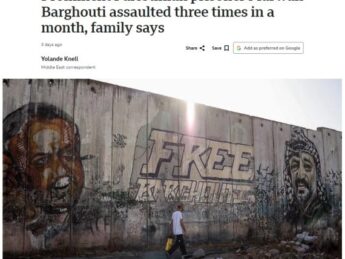
Middle East correspondent Yolande Knell provided what was framed as a deep dive into the volatile property disputes of East Jerusalem. But what was delivered to BBC audiences was a masterclass in deliberate distortion. Knell didn’t merely stumble into bias; she systematically bypassed the legal and historical realities of the area to fit a constructed narrative.
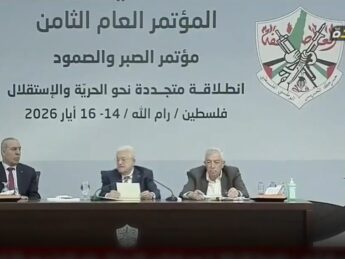
BBC fails to provide critical context on Palestinian leadership and governance in coverage of the eighth Fatal General Conference, an event whose flag displays rifles, a grenade and an Israel-erasing map of "greater Palestine."
The BBC limited its reporting on the findings of the Civil Commission to a few sentences in the middle of the night, effectively burying the horrific realities, while choosing to focus on the possibility of the death penalty for the terrorists responsible.
The BBC has chosen to promote claims made by the lawyer who last December described it as “pro-genocide and pro-apartheid.” The fact that Yolande Knell did not confirm the allegations – and failed to provide audiences with the full range of information concerning the convicted terrorist who made them – apparently does not worry the corporation that claims to provide “news you can trust.”
This kind of asymmetric language use is a deliberate framing choice which consistently creates a biased image of the conflict and quietly dehumanizes Israeli civilians, while erasing Arab and Muslim agency. The BBC claims to hold itself to high standards of impartiality, but when its journalists continually make language choices which deliberately distort the audience's view, they fail to meet that standard.
In order to meet its obligations to provide audiences with balanced and fair reporting, the BBC would have to consider the Palestinian people as equally capable of being political actors in their own right, something which unfortunately happens all too rarely.
The Telegraph recently reported on a CAMERA study of headlines to reports published on the BBC News website’s dedicated “Israel-Gaza war” page in the two years following the outbreak of the war between Hamas and Israel.