
For the second time in four months, and 736 days since Hamas and other terrorists kidnapped 251 Israelis and foreigners, CAMERA’s Jerusalem office prompts correction of Haaretz‘s mischaracterization of the hostages as prisoners.
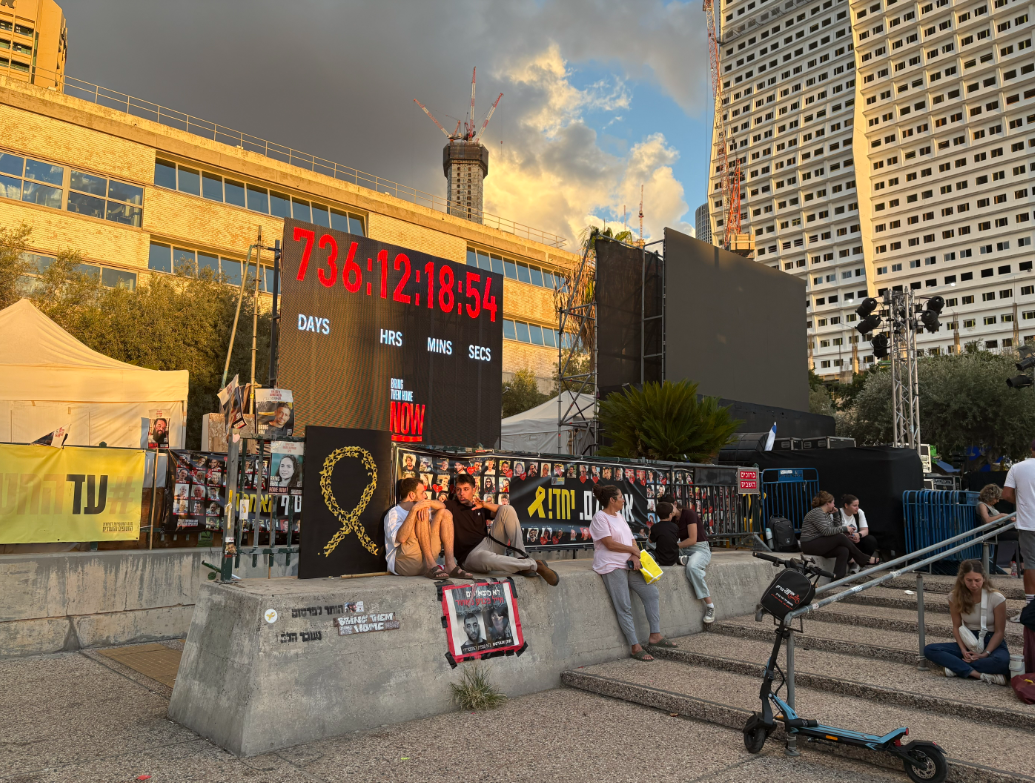
Israelis gather at Hostage Square in Tel Aviv, Oct. 12, 2025, hours before the hostages are expected to be released (Photo by Tamar Sternthal)
The article erroneously cited “the coordinator of the efforts to locate prisoners and MIAs, Maj. Gen. Nitzan Alon.” (Emphasis added. An archived version of the original is available here.)
Maj. Gen. Alon’s title is “Head of the Hostage and Missing Persons Headquarters, MG (Res.) Nitzan Alon.”
The Hebrew version of the same article rightly refers to him as “coordinator of the captives and missing.”
The difference between “prisoners” and “hostages” is significant.
The hostages held in the Gaza Strip have not committed crimes and are not being held lawfully. Nor are they awaiting any trial of any kind. They are held incommunicado with no Red Cross visits and in total violation of international law. The captured soldiers are not prisoners of war because until Hamas launched its surprise slaughter and kidnapping spree targeting civilians and soldiers alike, the two sides were not in a state of war.
Other media outlets which have likewise corrected the mischaracterization of hostages as prisoners include The Jerusalem Post, United Press International and BBC Arabic (see before and after).
In response to communication from CAMERA, Haaretz today amended the language which now accurately refers to “the coordinator of the efforts to locate hostages and missing persons.”
For additional instances in which Haaretz‘s English edition introduced misinformation which had not appeared in the Hebrew version of the same article, see “Haaretz, Lost in Translation.”