New York Times social media guidelines state that “If our journalists are perceived as biased or if they engage in editorializing on social media, that can undercut the credibility of the entire newsroom.” It can. And it does.
It can. And it does.
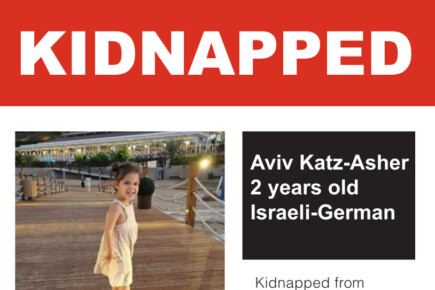
Virulent anti-Israel activists have been tearing down posters of kidnapped Israelis. The New York Times wants us to wonder if maybe those putting up the posters that are the real problem.
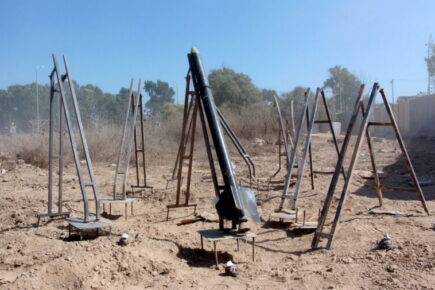
Hundreds of people sheltering at the Ahli Arab Hospital in Gaza City were killed in an explosion that some have blamed on Israel, but which Israel says was caused by an errant Islamic Jihad rocket. Indeed IJ rockets have caused so much death and destruction in Gaza that Hamas has criticized the group and demanded they pay compensation to families of the dead.
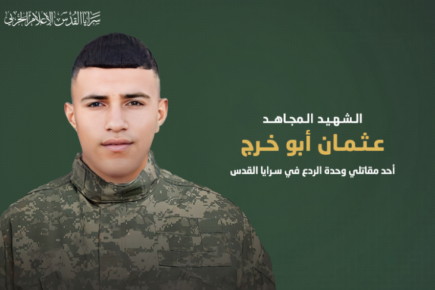
Like an unshakeable addiction, the impulse of mainstream journalists to conceal the terror affiliations of Palestinians killed by Israeli troops remains a persistent feature of reporting at major news outlets. Most recently, Islamic Jihad and Al Aqsa Martyrs Brigades fighters get a pass at AP and The New York Times.
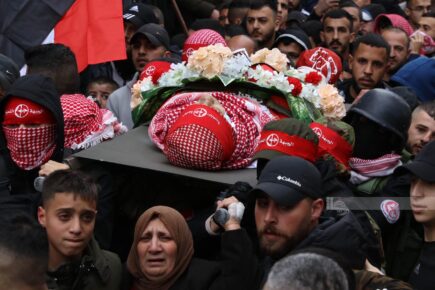
The PFLP claimed him. His goodbye note named the PFLP. He was buried in PFLP attire. Carried by PFLP members. His mother wore a PFLP headscarf. But the New York Times insisted he had no affiliation.
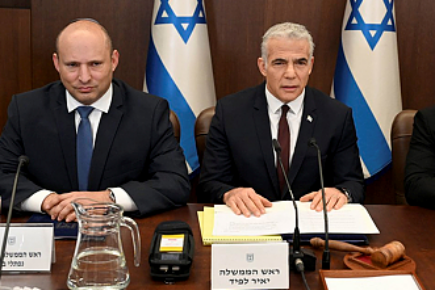
Freedom House: "The conduct of [Israel's] 2022 elections was generally perceived as fair and successful." If only the The New York Times' editorial board would perform so well.
If whole-reporting seeks to fully and fairly cover the world, half-reporting covers — and covers-up. This time, New York Times half-reporting concealed Palestinian support for the repression of Uyghurs.
After twice this year failing to correct false references to Jesus as either Palestinian or living in Palestine, The New York Times has finally come through with a stealth correction after an additional item falsely stated that the revered figure lived in Palestine.