Media coverage of the delayed transfer of tons of mail sent to West Bank Palestinians doesn't deliver the full story, omitting crucial details along with relevant context and erasing nuance.
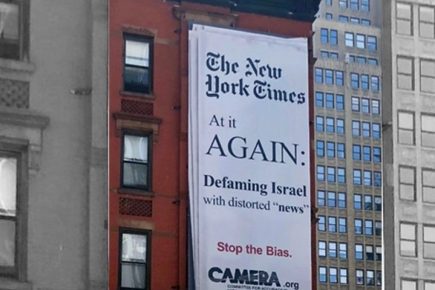
Following a well-worn pattern, The New York Times is again downplaying Palestinian belligerence, this time obscuring the fact that intensive Palestinian rocket attacks against southern Israel prompted a wave of Israeli airstrikes on Hamas sites in the Gaza Strip in the last 24 hours.
One can debate the merits and demerits of a law while presenting the facts accurately. Indeed, that is the role of a journalist. Both news stories and opinion columns should be based on accurate facts without overstatement or distortion. Unfortunately, many in the mainstream media have failed in these respects.
The PA and its leaders have a long and tragic history of rejecting peace and proliferating terror, irrespective of who sits in the White House. And the press, responsible in large measure for crafting the first draft of history, would do well to record it.
Palestinian rulers oppressing and brutalizing their own people seldom make the front page. The reason is simple: The media is often uninterested in reporting on Palestinian affairs unless Israel can be blamed.
Adjectives and labels are used to influence rather than inform; they are the weapons of journalists who prefer advocacy journalism over objective reporting. The frequent use of labels by Times reporters demonstrate how far they've strayed from their stated mission of independent and deep reporting.
The New York Times wants readers to think only "conservatives" have taken issue with the UN Human Rights Council's anti-Israel bias. Cc: Ban ki-Moon, Kofi Annan, Samantha Power, Susan Rice, Jeff Merkley, Bill Nelson, Nita Lowey, and the Times editorial board.
Hundreds of Palestinians are taking to the streets to protest the PA's sanctions against the Gaza Strip. Yet, many news outlets are failing to provide coverage.