David M. Litman is the U.S. Media Research Manager at the Committee for Accuracy in Middle East Reporting and Analysis (CAMERA), where he covers anti-Israel bias in the media. Previously, David worked at an independent watchdog organization focused on anti-Israel bias, international law, and human rights issues in the United Nations and international courts. David graduated magna cum laude from Case Western Reserve School of Law and holds a BA in International Studies.
While the paper may be understandably disappointed in how its case against the anti-BDS law turned out, as an outlet purporting to be engaged in “feisty journalism” and “the fight for truth,” the Arkansas Times owes its readers a minimum of factual accuracy.
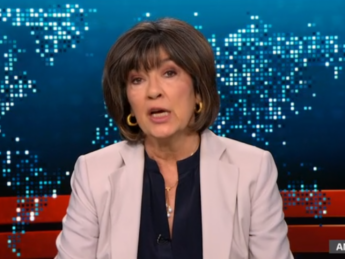
It seems likely that CNN's Christiane Amanpour entirely fabricated findings from nonexistent “latest polls.” A request for substantiation sent to Amanpour has so far gone unanswered.
In an article about a cartoonist's lampooning of an Israeli minister, CNN inexplicably included a cartoon recalling multiple antisemitic themes, as well as unchallenged, ahistorical commentary depicting Israelis as needlessly cruel.
Far from being centers of enlightenment and progress, too many universities are instead establishing themselves as hotbeds of bigotry and backwardness, embracing the kind of crude antisemitic conspiracy theories that helped fuel some of history’s most violently racist moments, from pogroms to the Holocaust.
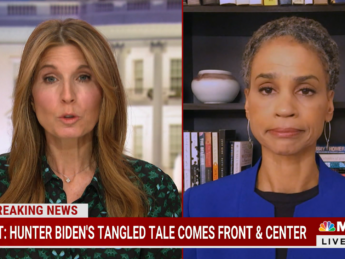
On the same day the Anti-Defamation League reported that disturbingly high levels of Americans believe in anti-Jewish tropes, MSNBC anchor Nicolle Wallace brazenly broadcasted one such trope on Deadline: White House.
The extent to which disclosures of potential conflicts of interest should be enforced at a publication is, of course, a matter of legitimate debate. But by applying its own standards selectively, Opinio Juris has opened itself to valid charges of lacking both impartiality and professionalism.
By glibly attempting to compare Israel to Bashar al-Assad's brutal regime, Amanpour once again demonstrates that she places her contempt for the Jewish state over her commitment to honesty.
Despite one of its editors expressing such a strong position in favor of greater disclosures about an author’s potential conflicts of interest at a different legal blog, Opinio Juris’ actions thus far indicate they do not apply that standard to themselves.
Dahl’s antisemitism was about as subtle as a sledgehammer, and his hatred of Israel was steeped in his hatred of the Jewish people. So why did the Washington Post distort this fact?
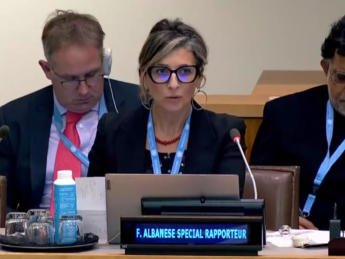
The answer as to why these actors are so militant about appointing and defending known anti-Israel partisans and antisemites should be obvious. A fair analysis of the allegations would not produce the outcome they so desire. Whether ensuring only anti-Israel partisans are appointed to investigate Israel or crying “smear campaign” when those partisans are caught saying the quiet part out loud, these actors are invested in creating a lose-lose game for the Jewish state and the Jewish people.