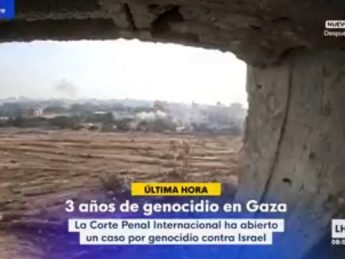
On the anniversary of the Oct. 7 massacre, Spain’s public broadcaster chose to highlight not the massacre itself but an accusation of “genocide” against the people who had been attacked.
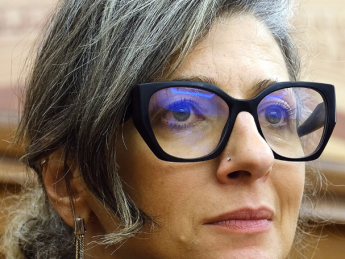
The latest Albanese antisemitism-related fiasco is pertinent information regarding a figure whom the media have spent years presenting as an Israel expert – someone whose every utterance many journalists deem newsworthy, CAMERA Español’s Masha Gabriel writes in The Jerusalem Post.
Spanish media has contributed greatly to the hostile climate with coverage of the conflict and global geopolitics that demonizes the Jewish state and normalizes the hatred of Jews and Israel, CAMERA's Marcelo Wio writes in JNS.
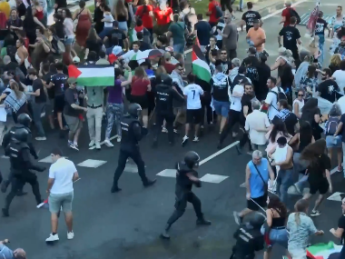
Spanish media and public discourse displayed far more interest in the Israeli minister’s faraway humiliation of the group than in the Basque police’s home-court violent welcome for the same activists, CAMERA Español's Masha Gabriel writes in JNS.
EFE's and RTVE's preoccupation with defending themselves against false accusations of passing off old Kabul images as current scenes from Iran detracted from justified criticism of instances in which the mainstream Spanish news outlets provided less than rigorous reporting.
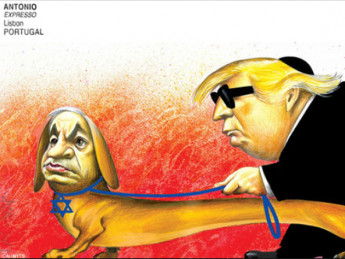
Six years after The Times’ notorious publication of a vile antisemitic cartoon depicting Israeli Prime Minister Netanyahu as a guide dog wearing a Jewish star collar leading a blind, kippah-clad President Trump, antisemitic tropes take firm root in countless media outlets globally.
Following correspondence from CAMERA Español, Spain's publicly-funded RTVE removed an Instagram post which falsely claimed that Israel passed a law enabling the “death penalty for Palestinians.”
Spain's publicly funded RTVE reveals a troubling pattern in its coverage of the Israel-Hamas war: ideological activism disguised as journalism, the systematic omission of Israeli suffering and the normalization of terms like “genocide” without legal or factual grounding.