Accuracy and accountability are among the most important tenets of journalism. In combination, they mean media organizations are expected to publish or broadcast forthright corrections after sharing inaccurate information. The following corrections are among the many prompted by CAMERA’s communication with reporters and editors.
Through a seemingly minor correction following CAMERA's communication, CNN acknowledged that the legal status of West Bank settlements is a matter of debate among international law experts and not an absolute, indisputable fact.
While summarizing the day’s news, CNN reverted to a familiar media habit by referring to Tel Aviv as Israel’s capital. After CAMERA’s outreach, it corrected the text and removed the reference.
Parroting Islamic Republic propaganda seeking to justify the mass casualty attack on Dimona yesterday, media outlets including AFP, New York Times and CNN falsely reported that the southern Israeli town is home to Israel's nuclear program. In fact, the town is some 15 kilometers northwest of the secretive facility. UPDATE: The New York Times corrects.
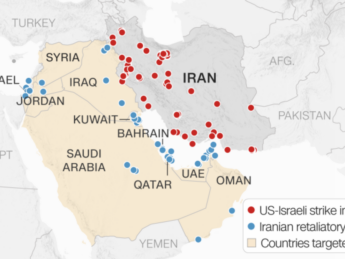
CNN corrected a map that had wrongly attributed a strike on a girls’ school in Minab that was adjacent to an IRGC military base to both the U.S. and Israel, even though its own reporting and cited sources said the perpetrator was unknown and the casualty claims unverified at the time of the report.
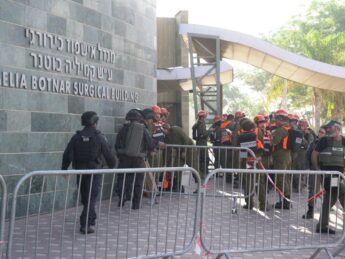
In a recent video, posted on CNN’s TikTok and YouTube “Shorts” channels, Amanpour claimed that an Iranian ballistic missile struck “near a hospital” in Beer Sheva. In fact, the missile slammed directly into the Soroka Medical Center, destroying the hospital’s surgical ward.
Until CNN is honest about the genocidal crusade of Iran and its proxy terrorist groups, the network’s audience will fail to comprehend the motivations of the parties to the conflict. One side seeks to erase the Jewish state from existence, while the other side refuses to lie down and die.
After a vague "clarification," the article is still misleading as to the frequency of the use of this weapon. Military expert John Spencer called it "a very commonly used tool."
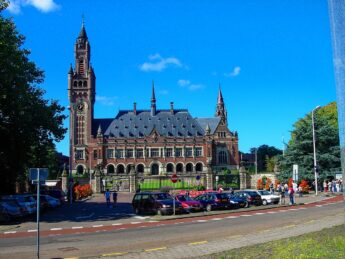
When the International Court of Justice issued an order on January 26 in the “genocide” case between South Africa and Israel, it soon became common knowledge that the ICJ had found it “plausible” that Israel was committing “genocide.” This common knowledge, however, was in fact a myth.
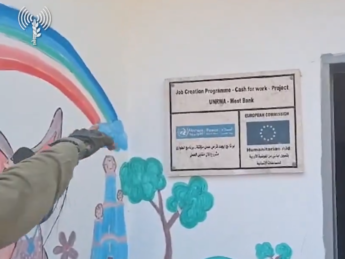
Given CNN’s fondness for investigations, one is left to wonder: why isn’t CNN devoting any substantial effort to holding UNRWA to account by asking the hard questions of the agency?
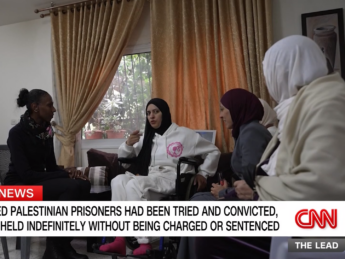
CAMERA promptly alerted the network to a significant error in an video report about released Palestinian prisoners. Instead of a correction, the day after CAMERA’s communication, the network went on to publish a written version of the report, prominently featuring the same exact error in the first two sentences. CAMERA has now acquired and provided the network with conclusive evidence that the claim is false.