The BBC has duties to its audience, set down in clear editorial guidelines. The pressing question is why does it continually break them on reporting around Israel, and why do those failures only tend in one direction.
Journalism does not merely report on the battlefield, the information environment is itself part of the battlefield. Reporters can therefore inadvertently find themselves recruited into the information strategies of parties to a conflict. The BBC’s duty of impartiality consequently requires a battlefield level responsibility to guard against the circulation of propaganda on its online platforms.
Rather than investigating whether the United Nations' exceptional scrutiny and condemnation of Israel is justified, the BBC usually simply amplifies it.
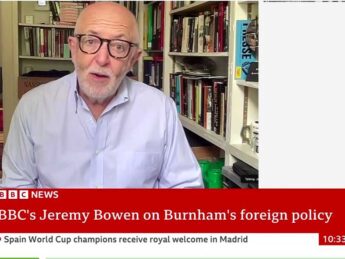
There is a line between analysis and opinion, and on the BBC that line must be iron. Analysis presents facts and shows how those facts connect. On the BBC, it cannot be partisan. It must be entirely factual, accurate and impartial. It must be a tool to allow audiences to reach their own conclusions. Jeremy Bowen is not a journalist, he is a public servant, and BBC radio and television is not a Guardian opinion piece. The BBC is not the right forum for offering heavily politicised, carefully cherry picked, deeply biased conclusions born in a very specific political echo chamber.
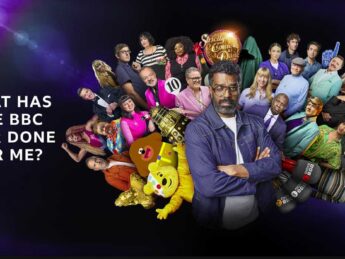
The BBC used a joke about puritanical groupthink to advertise the importance of the licence fee. The result is an accidental masterpiece of self parody.
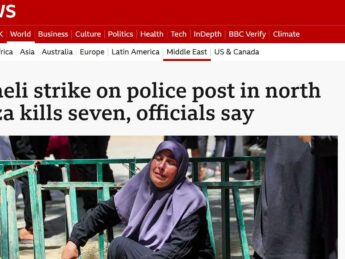
The BBC "Hamas-run" formula, adopted to help inform, continues to obfuscate rather than clarify. Once again, the BBC refuses to lay any agency at the feet of people it increasingly appears to view as purely reactive, uncomplex and incapable of strategic thought.
The BBC has a duty to accuracy and impartiality which they fail to uphold time and time again, because of an institutional inability to hold Hamas responsible for their own actions, or even name them as actors at all. In this way they recruit themselves into Hamas’ propaganda strategy and entirely abdicate their responsibility to their audience and licence fee payers.
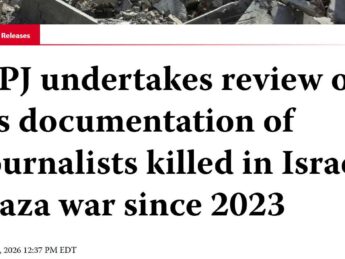
The BBC chose not to tell its audiences about the CPJ review into the deaths of journalists in Gaza. Why is an institution committed to impartiality obscuring the truth?
Why does the BBC continue to prioritise the amplification of Hezbollah talking points over meeting it’s obligation to accuracy and impartiality? It is a question the institution must grapple with as its journalists’ failures continue to undermine BBC standards.
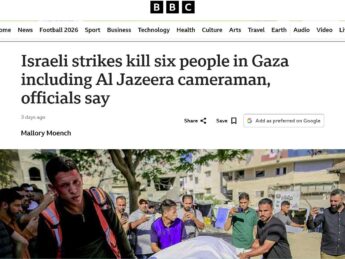
The BBC fails to do basic fact checking on fresh claims of targeting journalists in Gaza, a failure which illustrates a much deeper and more insidious problem than simply erosion of journalistic standards.