Rather than exploring the root causes of this epidemic of hate against British Jews, presenters Laura Kuenssberg and Paddy O’Connell leaned into an unacceptable trope we have called out here before, namely, that some Jews might be responsible for harm committed against them.
Two different interviews, one with a Pakistani diplomat and one with an Israeli diplomat, showcase how the BBC uses language and framing to construct a narrative. This allows the corporation to purport to show both sides of a conflict, while presenting those sides in a way to whitewash one and vilify the other.
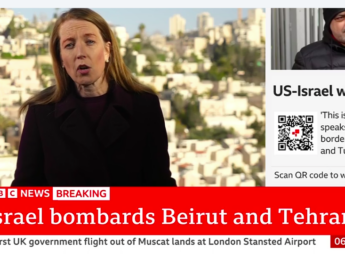
Despite clear statements from both the US and Israel that the ceasefire agreement did not include Lebanon, the BBC Today program's framing and language created an image of an out-of-control Israel risking the fragile peace, while never clearly informing listeners that Hezbollah is a proxy Iranian military occupying Lebanon which has, once again, started a war with Israel on behalf of the Islamic regime.
While we do not yet know the names of those responsible for this latest attack, we do know the rhetoric and actions that are creating these fears and security concerns. The BBC however, while content to point fingers at Israel, does not seem to want to name them.
There are two stories here: the one the BBC presents, which is of a grassroots community group reacting to Israeli aggression; and the truth, which is of a well-funded and organized foreign army occupying and controlling Lebanon, refusing to disarm, continuously starting wars with Israel, and engaging in brutal acts of criminal violence against civilians in the region and beyond through its criminal networks.
This kind of asymmetric language use is a deliberate framing choice which consistently creates a biased image of the conflict and quietly dehumanizes Israeli civilians, while erasing Arab and Muslim agency. The BBC claims to hold itself to high standards of impartiality, but when its journalists continually make language choices which deliberately distort the audience's view, they fail to meet that standard.
The BBC has shown in recent days that it is absolutely capable of drawing those lines, labelling potential propaganda, and clearly pushing back on guests making unverified claims when it comes to the Islamic Regime in Iran. It would seem that when the conflict involves Israel alone, as opposed to Israel and the US, the rules are applied somewhat differently.
In order to meet its obligations to provide audiences with balanced and fair reporting, the BBC would have to consider the Palestinian people as equally capable of being political actors in their own right, something which unfortunately happens all too rarely.
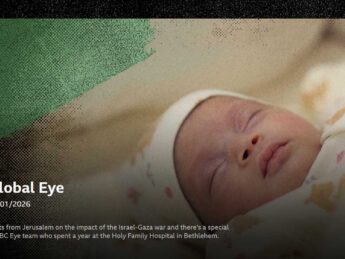
Instead of a powerful and moving film on the struggles of pregnancy and motherhood in war, the BBC has instead aired a carefully constructed attack on the State of Israel.
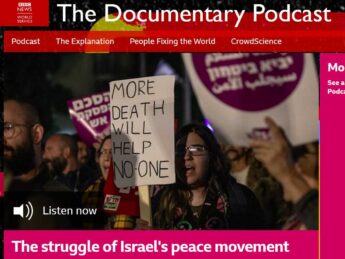
To produce a documentary about a peace movement which only shows pain, suffering, and trauma on one side, and lays all agency, responsibility, and violence at the feet of the other, is a narrative decision which fails catastrophically in the BBC’s commitment to impartiality and accuracy.