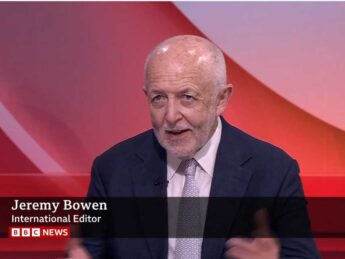
Jeremy Bowen's analysis of the Memorandum of Understanding between the US and Iran creates a caricature of the war in Lebanon, and almost entirely erases Hezbollah
Middle East correspondent Yolande Knell provided what was framed as a deep dive into the volatile property disputes of East Jerusalem. But what was delivered to BBC audiences was a masterclass in deliberate distortion. Knell didn’t merely stumble into bias; she systematically bypassed the legal and historical realities of the area to fit a constructed narrative.
The BBC's expresses a shocking double standard on the voluntary migration of Gazans out of Gaza. Some groups of refugees are allowed to leave their war zones, while Palestinians are expected to stay.
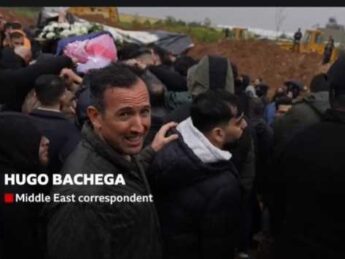
The BBC's Hugo Bachega comes close to accurately reporting on Hezbollah's cynical exploitation of Lebanon, but uses framing and carefully chosen interviews to revert back to a one-sided narrative of Israeli responsibility
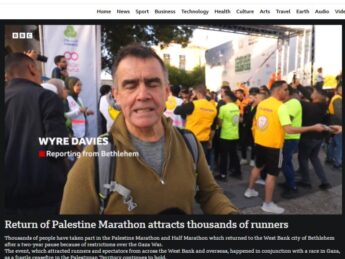
The BBC's Wyre Davies reports from the Bethlehem marathon, but engages in a pattern of omission, framing and narrative construction which creates an overall misleading image of the situation in the West Bank.
The BBC limited its reporting on the findings of the Civil Commission to a few sentences in the middle of the night, effectively burying the horrific realities, while choosing to focus on the possibility of the death penalty for the terrorists responsible.
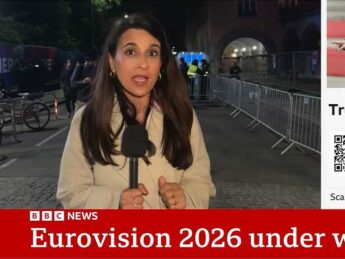
In all the noise surrounding Israel at Eurovision, the BBC never asks one fundamental question: Could it be that ordinary voters at home don't possess an obsessive hatred of Israel and care mainly about which song they like?
At the beginning of the week, 16-year-old Libby told the BBC that a man screamed at her that she had committed genocide, CAMERA's Leah Benoz writes in JNS. The BBC spent the rest of the week telling her attacker that the genocide was real.