BBC runs into more trouble when attempting to correct after misreporting that an Israeli killed in an Iranian missile attack was "a worker from China."
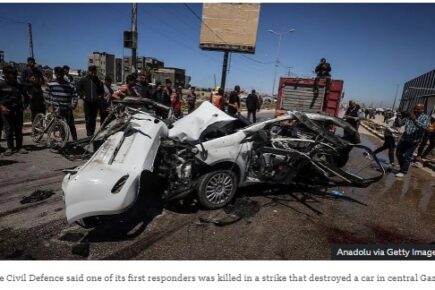
The BBC parroted without qualification a claim from Hamas' civil defense organization that an Israeli military strike in the Gaza Strip killed an emergency medical worker. The network later ignored information that in fact "first responder" Hazem Rami Ali Aidi commanded a cell which carried out Oct. 7 atrocities.
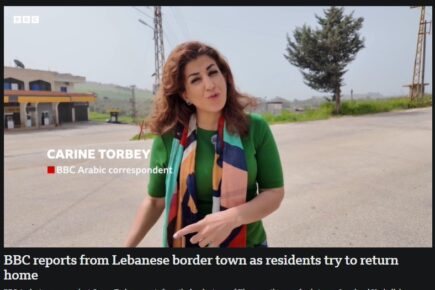
Remarkably, Torbey – who only utters the word Hezbollah once in her entire report – has nothing to tell BBC audiences about the terrorist organization’s rejection of Lebanon’s direct negotiations with Israel or the threats toward the Lebanese president and government from Hezbollah officials that have been voiced both before and since the ceasefire came into effect.
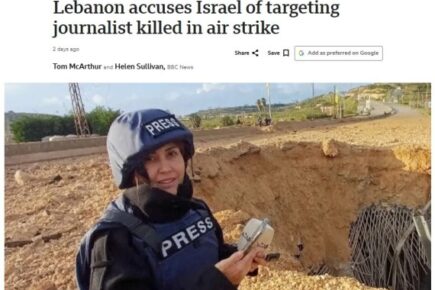
Omitting critical information about the deadly incident in which Amal Khalil, who worked for the Hezbollah-affiliated Al-Akhbar, was killed, BBC advances the false narrative that Israel targets journalists.
The BBC has chosen to promote claims made by the lawyer who last December described it as “pro-genocide and pro-apartheid.” The fact that Yolande Knell did not confirm the allegations – and failed to provide audiences with the full range of information concerning the convicted terrorist who made them – apparently does not worry the corporation that claims to provide “news you can trust.”
Despite the BBC having a permanent bureau in Jerusalem, its audiences have seen remarkably little reporting from the sites of Hezbollah attacks and the Israelis affected by them have been largely ignored. As these reports from Metula show, even when the BBC did send staff to one of the places worst affected by both this round of hostilities and the previous one, those journalists still managed to adhere to the "invisible Israelis" style of reporting that avoids telling audiences the whole story.
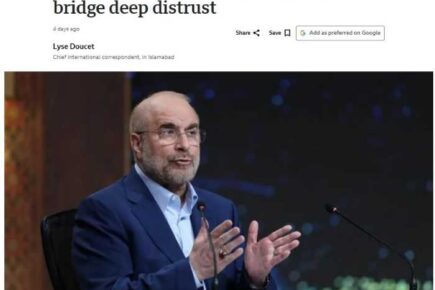
If BBC Swahili, BBC Turkish, BBC Indonesia, and BBC Hausa could provide an informative profile of Iranian negotiator Mohammad Ghalibaf – in some cases two weeks before the talks in Islamabad – then the corporation’s English-language services should surely have been able to follow suit.
Two different interviews, one with a Pakistani diplomat and one with an Israeli diplomat, showcase how the BBC uses language and framing to construct a narrative. This allows the corporation to purport to show both sides of a conflict, while presenting those sides in a way to whitewash one and vilify the other.
The BBC continues to ignore the abuse of journalism by terrorist organizations like Hamas and Hezbollah, not least by failing to adequately report on the collaboration between such organizations and media outlets such as Al Jazeera.
Despite clear statements from both the US and Israel that the ceasefire agreement did not include Lebanon, the BBC Today program's framing and language created an image of an out-of-control Israel risking the fragile peace, while never clearly informing listeners that Hezbollah is a proxy Iranian military occupying Lebanon which has, once again, started a war with Israel on behalf of the Islamic regime.