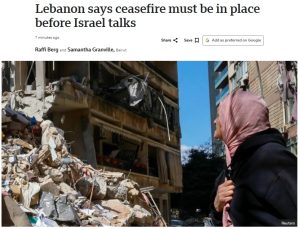
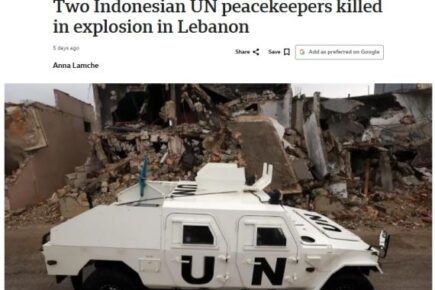
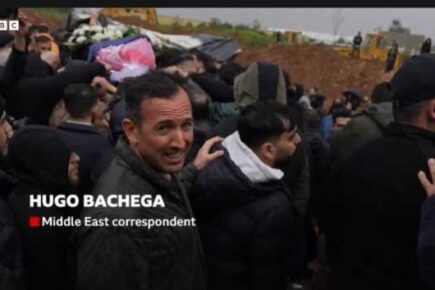
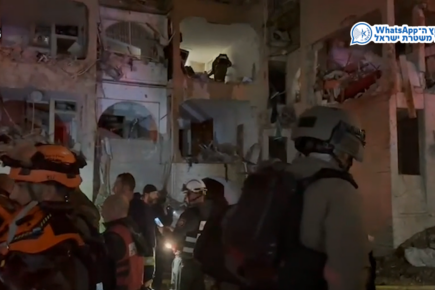
BBC audience understanding of the upcoming talks between Israel and Lebanon – and any future developments – would of course be greatly enhanced were the corporation to focus less on framing of the story and actually provide information concerning the stance of the terrorist organization that brought about the need for them in the first place and is apparently intent on ensuring that they do not succeed.
The BBC displays a troubling pattern of seeking to establish a narrative that supports its long-standing chosen framing of Israel’s responses to attacks by terrorists, while sidelining the issue of the abuse of the journalistic profession by groups such as Hamas and Hezbollah and legitimizing the media arms of terrorist organizations.
When media and advocacy organizations serially fail to challenge those who exploit the profession for the purposes of terrorism, they undermine its very foundations and compromise public trust in journalism in general. Adopting that stance is especially damaging to BBC credibility, but the corporation continues to embrace that editorial policy.
While we do not yet know the names of those responsible for this latest attack, we do know the rhetoric and actions that are creating these fears and security concerns. The BBC however, while content to point fingers at Israel, does not seem to want to name them.
Journalists are inverting reality by creating a perception of illegitimacy against the U.S. and Israel by associating the word “war crimes” with their actions, while simultaneously creating a perception of legitimacy, by way of omission, for the Iranian regime even as it regularly lobs cluster munitions at densely populated cities.
There are two stories here: the one the BBC presents, which is of a grassroots community group reacting to Israeli aggression; and the truth, which is of a well-funded and organized foreign army occupying and controlling Lebanon, refusing to disarm, continuously starting wars with Israel, and engaging in brutal acts of criminal violence against civilians in the region and beyond through its criminal networks.
Having the BBC’s costly “anti-disinformation” department provide uncritical worldwide amplification for that already viral Russian propaganda would hardly seem to the be the best way to convince its funding public that the corporation has a “critical role” to play in providing “access to reliable information.”
The BBC's outgoing director general appears to aspire to leave a legacy that diminishes the corporation’s accountability to the public rather than improving it, Hadar Sela writes in The Jewish Chronicle.
As has also been seen in BBC News website coverage of Iranian regime attacks on Israeli civilians, despite the corporation having a permanent bureau in Jerusalem, audiences have seen remarkably little reporting from the sites of Hezbollah attacks. That lack of coverage stands out even more when compared to the volume of reporting from other locations, particularly Lebanon.