Accuracy and accountability are among the most important tenets of journalism. In combination, they mean media organizations are expected to publish or broadcast forthright corrections after sharing inaccurate information. The following corrections are among the many prompted by CAMERA’s communication with reporters and editors.
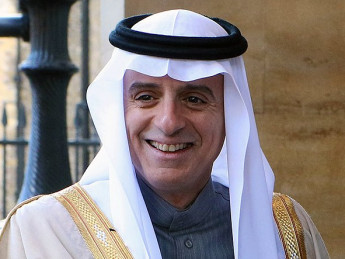
CAMERA prompts correction of an AP story which had said that Saudi Arabia regards Israel with hostility. In fact, Israeli-Saudi ties have been warming in recent years, thanks to their common foe Iran.
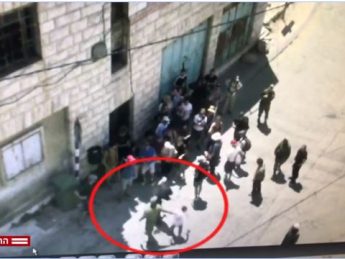
After initially reporting that abuses carried out by employees of the international monitoring group in Hebron were "alleged," Haaretz's English edition corrects, acknowledging that videos documented the vandalism and violence.
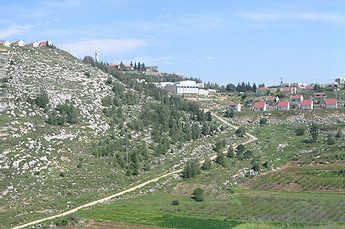
CAMERA prompts correction after Haaretz incorrectly reported that Palestinians were evicted from their homes to make way for an archaeological attraction in Shiloh.
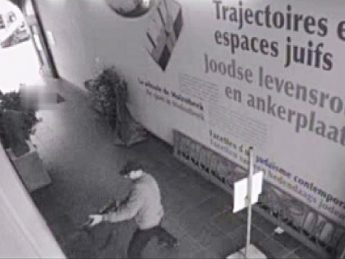
CAMERA prompts correction after an AFP story about Mehdi Nemmouche, accused of killing four in the 2014 terror attack at a Brussels Jewish museum, opened with a description of him as a "'very polite' Frenchman."
CAMERA prompts correction of an AP article appearing in the State Journal-Register (Springfield, Ill.), which inaccurately reported that "Israel claimed the West Bank from the Palestinians in the 1967 Middle East War." In fact, prior to the Six Day War, the West Bank was under Jordanian control.
For the third time, CAMERA prompts a Haaretz correction on Israel's "Nakba Law," which enables the Finance Minister to withhold funding from state-funded bodies which mourn the founding of Israel. Haaretz clarifies today that the law does not forbid discussion of the Palestinian "catastrophe" in public institutions.