Accuracy and accountability are among the most important tenets of journalism. In combination, they mean media organizations are expected to publish or broadcast forthright corrections after sharing inaccurate information. The following corrections are among the many prompted by CAMERA’s communication with reporters and editors.
CAMERA prompts correction of a CBSN report which falsely stated that Palestinians had fired "hundreds of rockets at Israel's military." CBSN corrects, stating that, in fact, Palestinians fired hundreds of rockets at Israeli cities and civilian targets.
CAMERA prompts correction of a New Yorker article which had falsely claimed that Israeli troops killed a Gaza fisherman "ostensibly for sailing past the six-mile limit," but the improved version still neglects to report that according to both Israeli and Palestinian sources, Nawaf Attar was approaching the Gaza security fence when he was shot dead.
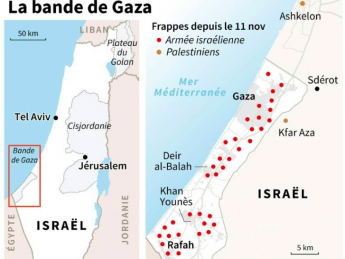
An AFP infographic grossly minimizes the impact of Palestinian attacks on Israel while at the same time emphasizing the impact of Israel's military response on Gaza.
CAMERA Arabic has prompted correction of a France 24 Arabic article which erroneously reported that Panama, along with Paraguay, had moved its embassy to Jerusalem only to return it back to Tel Aviv.
CAMERA prompts correction of a Los Angeles Times article which had incorrectly blamed the Israeli blockade for unpaid salaries of civil servants in the Gaza Strip. In fact, Mahmoud Abbas' Palestinian Authority, not Israel, slashed Gaza salaries.
Following a Washington Post correction, Reuters today also corrects the erroneous claim that "Pittsburgh Jewish leaders" penned a letter to President Trump telling him he is unwelcome at memorial events for the Tree of Life massacre victims.
After communication from CAMERA, the Washington Post corrected a misleading headline suggesting that Pittsburgh's Jewish community leaders were averse to a condolence visit by the U.S. President.