Accuracy and accountability are among the most important tenets of journalism. In combination, they mean media organizations are expected to publish or broadcast forthright corrections after sharing inaccurate information. The following corrections are among the many prompted by CAMERA’s communication with reporters and editors.
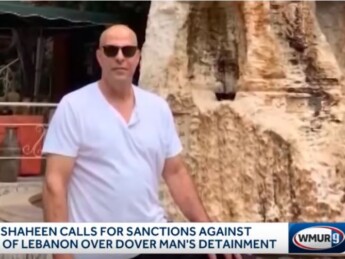
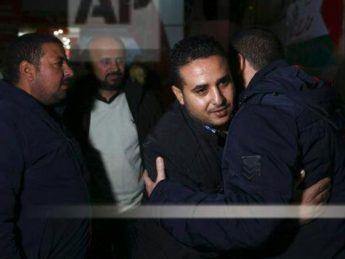
AP headlines claiming that imprisoned Lebanese-American Amer Fakhoury "worked for Israel" exposes a double standard in the news agency's treatment of members of the Israeli-backed Lebanese SLA versus members of the Iranian-backed Lebanese Hezbollah.
Media outlets largely ignored last night's infiltration of armed Palestinians from Gaza into southern Israel as world leaders are set to convene at Jerusalem's World Holocaust Forum. Reuters falsely reported an "attempt[ed]" infiltration, when in fact the assailants were hundreds of meters inside Israeli territory.
CAMERA prompts correction of an Associated Press article which incorrectly reported that there is no egalitarian prayer area at Jerusalem's Western Wall. Natan Sharansky's plan, abandoned by Prime Minister Netanyahu, was to upgrade and to expand the existing space.
CAMERA prompts a Times of Israel correction of an AP article which inaccurately described Bethlehem as "almost completely surrounded by the barrier and a string of Jewish settlements." AP itself has failed to correct.
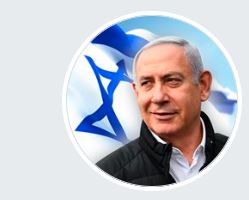
CAMERA prompts improved after AP incorrectly reported that Facebook suspended Israeli Prime Minister Benjamin Netanyahu's account for a post saying "Arabs want to annihilate us." A New York Times Op-Ed by Raja Shehadeh also errs.
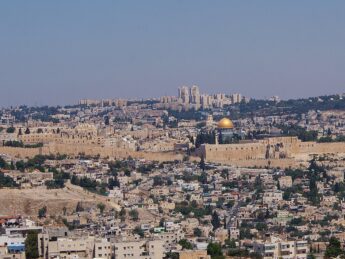
Given the complicated geopolitical realities of the disputed city of Jerusalem, journalists have a particular responsibility to be precise. That was not the case, however, when several news reports this week inaccurately placed the demolished Wadi Hummus buildings in Jerusalem.
For the second time this year, CAMERA prompts correction of an Associated Press article which wrongly used the term "Palestine." The article is still marred, however, by omission of the fact that much of the international community views Hamas as a terror group.
CAMERA prompts correction of Associated Press photo captions which had confused two Muslim pilgrimages, erroneously stating that pilgrims from Gaza have not been able to participate in the major hajj journey to Mecca for five years.
CAMERA prompts improved language after the AP initially reported that that the Egyptian-Israeli blockade of the Gaza Strip was "[o]stensibly meant to prevent arms from reaching Hamas."
CAMERA prompts correction of an AP story which had said that Saudi Arabia regards Israel with hostility. In fact, Israeli-Saudi ties have been warming in recent years, thanks to their common foe Iran.