There are, of course, Israeli Jews with racist attitudes towards Arab citizens of the state, and criticism of such attitudes – and resulting discriminatory policies – deserve serious scrutiny. However, within the Financial Times' moral binary, evoking oppressed Arab-Israelis who lack agency resisting their Jewish-Israeli oppressors, there is simply no room for nuance, or complexity of any kind which would complicate the desired narrative.
NPR went on a gaslighting blitz when it pretended that journalists out of Gaza aren't under Hamas control (including their own reporter there) and failed to acknowledge to its audience how many "journalists" in Gaza were outed as terrorists.
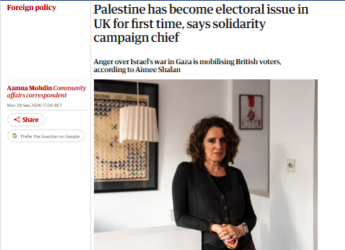
The Guardian uncritically published an interview with Aimee Shalan, the incoming director of the Palestine Solidarity Campaign, in which she repeated libels against Israel, and downplayed the extent to which the pro-Palestinian movement is compromised by antisemitism.
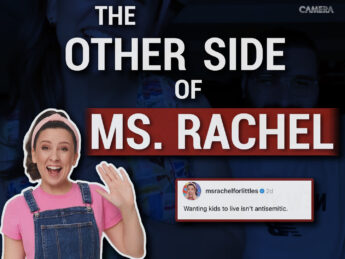
NPR and Rolling Stone interviewed Ms. Rachel, the popular children's YouTube entertainer, in advance of her first album's debut. Her sideshow activism for Gaza dominated the interviews, but Ms. Rachel was asked no hard questions. Sadly, she taught neither outlet that "J" is for "journalism."
Dutch customs conduct searches for West Bank products after new law, Flydubai hijacking attempt creates logistical challenges as many Israelis are stranded abroad, and former staffers voice concern with New York magazine's coverage of the Middle East.
By ignoring the threat that Hamas posed to Israel, The Washington Post's Shadi Hamid was free to accuse Israel of using excessive violence and committing war crimes in its war against Hamas, David Gerstman writes in The Jerusalem Post.
With the media misrepresentations falsely painting him as a victim of political persecution, Macklemore enjoys a bump in his status. Thanks to his sudden new fame, the former mid-tier rapper is now better positioned to spread hatred against Jews.
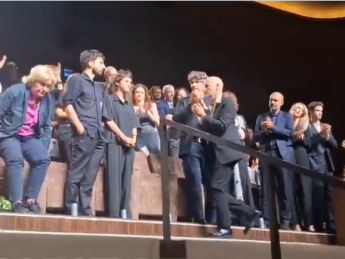
What exactly was the audience applauding when the screening of Naza ended at the Venice Film Festival? What was it? The war? The addition of yet more false material intended to constrain Israel’s ability to defend itself, asks CAMERA Español's Marcelo Wio in The Objective. Or the fear of ostracism, of cancellation, of the social, artistic, and moral gulag?
The core question is whether an institution, including a university, that is undermining federal policy is entitled to federal money. This is a precedented issue, and the federal government under Democratic and Republican administrations has used its Title IX prerogatives to compel universities to follow federal policy, including issues concerning expression. Universities that do not accept federal money are entirely immune from federal policy.