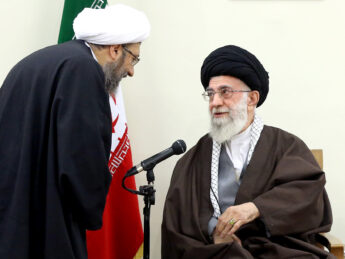
They put on kid gloves with a U.S. enemy and wear brass knuckles against America’s closest partner in the Middle East, CAMERA's Shay Khatiri writes at JNS.
A New York Times op-ed claims the recent wars in the Middle East demonstrate "the new physics of power." But these allegedly new physics are actually quite old.
A CAMERA Espanol study of EFE's post-Oct. 7 coverage finds anti-Israel libels -- from organ harvesting, to snipers targeting infants and the bombing of the Minab girls' school in Iran -- levelling up as supposedly legitimate news. Meanwhile, Hamas and Hezbollah violence melts away as episodic or nonexistent background noise.
The New York Times keeps trying to figure out why the U.S. went to war with Iran. Having proposed multiple answers, it now offers another one -- producing confusion instead of clarity.
“Reduced U.S. interests in the Middle East” is a fantasy, stemming from the illusion of U.S. oil independence. One would think that rising gas prices would have ended this myth by now after exposing how U.S. prices still reflect global production. On top of that, U.S. allies and partners in Asia and Europe, which Walldorf elevates as priorities, need Middle Eastern oil for their own economies.
After nearly six months, the UK press regulator, IPSO, partially upheld our complaint to the Times over a false claim regarding the Israeli casualty count during the 2025 Iran War.