
Updated: The “Contiguity” Double Standard
After Israel approved building a new neighborhood in Ma'aleh Adumim, a few miles east of Jerusalem, many news reports wrongly indicated that such building would prevent Palestinians from controlling "contiguous territory" in the West Bank.
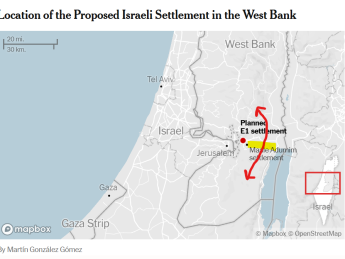
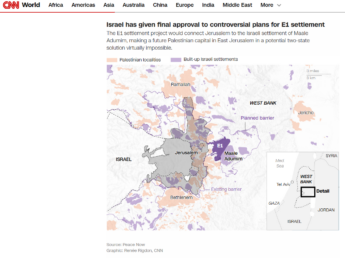



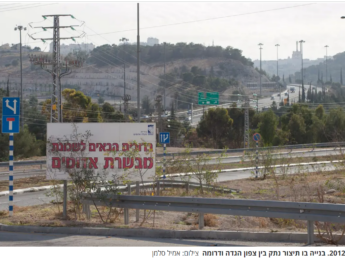
 CAMERA letter in the Washington Jewish Week rebuts claim by J Street's Alan Elsner that building in the "E-1" corridor linking Jerusalem with Ma'ale Adumim "would cut the West Bank in two."
  The Palestinians undermined the peace process by rejecting negotiations and going to the UN for statehood affirmation. Israel then announced plans to build in area E-1. NPR found fault only with Israel.
  USA TODAY ("Netanyahu's arrogance threatens peace prospects," December 6) blamed Israel and its prime minister, instead of repeated Palestinian rejections, for the absence of peace. CAMERA's December 11 letter to the editor spotlights the editorial's pretzel logic.