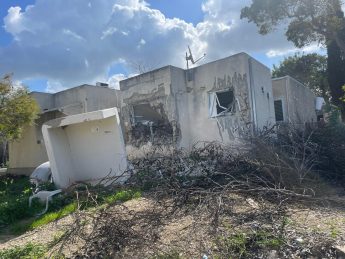
On the anniversary of the Oct. 7 massacre, Spain’s public broadcaster chose to highlight not the massacre itself but an accusation of “genocide” against the people who had been attacked.
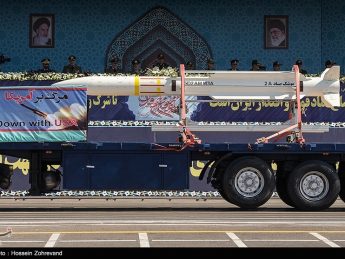
Most interestingly, 44 percent hold a positive view of President Donald Trump, but 51 percent hold a positive view of Prime Minister Benjamin Netanyahu, who has used even harsher rhetoric against the regime.
NPR went on a gaslighting blitz when it pretended that journalists out of Gaza aren't under Hamas control (including their own reporter there) and failed to acknowledge to its audience how many "journalists" in Gaza were outed as terrorists.
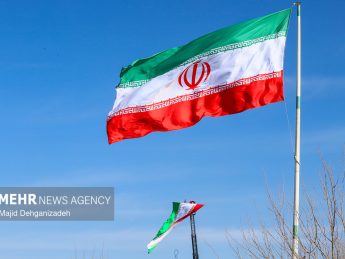
While major news outlets have extensively covered how rising gas prices impact voters ahead of the midterms, those same outlets buried the story when senior Iranian officials explicitly confirmed that Tehran is targeting oil tankers to inflate energy costs and influence the vote.
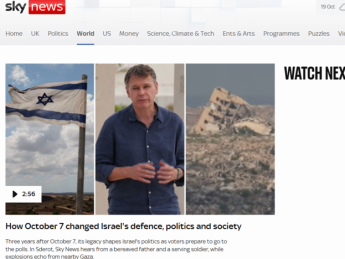
In a country that has seen rampant antisemitic attacks, historical and October 7th revisionism, British broadcasters have a duty not to use passive constructions that obfuscate responsibility. They also have a duty not to platform, without due diligence checks, those on the “Palestinian side” who openly support and eulogise the very terrorist groups who committed the October 7th atrocities. If Sky News obsessively coalesces around “the other side” narrative and offers Jewish voices no reprieve, must we conclude that it was never on the side of massacred Jews at all?
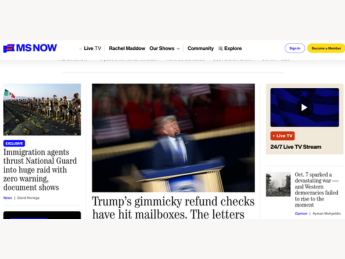
On the third anniversary of the October 7 massacre, MS NOW featured an op-ed by reporter Ayman Mohyeldin, who has a history of peddling antisemitic tropes, prominently at the top of its website.
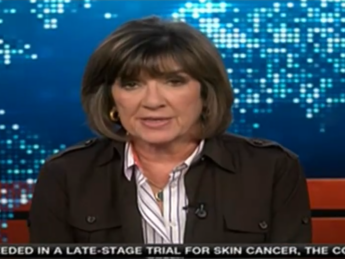
Tom Fletcher and the United Nations are entitled to their frustration with the IDF. Their missions do not exactly align. Both sides are also operating in an environment with no real historical precedents and are learning as they go. But Amanpour never engaged with the misaligned institutional imperatives.
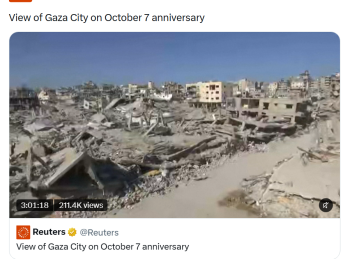
On the third anniversary of the Oct. 7 attacks, many major media outlets focused on Palestinians and Gaza, or the upcoming Israeli elections, instead of Israeli grief and commemoration.
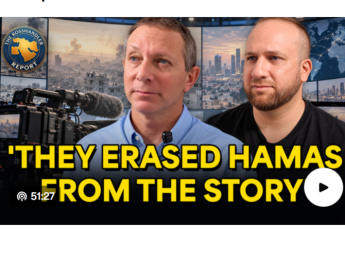
On Oct. 7, CAMERA's Adam Levick was interviewed by Israeli journalist Yaakov Lapin on his podcast The Rosshandler Report. They discussed how sections of the international media turned the worst massacre of Jews since the Holocaust into an unprovoked Israeli war against a faceless enemy.
Under what moral or journalistic compass does a leading news outlet mark the anniversary of a massacre by highlighting the victims’ ostensible failure to empathize with the plight of the other side, CAMERA's Tamar Sternthal asks in The Jerusalem Post.