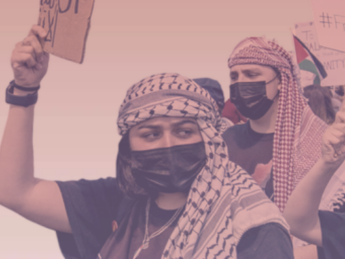
Students for Justice in Palestine supports the killing of American Jews. Passengers from Tel Aviv en route to Slovenia were forced to divert to Croatia. New Israeli defense technology emerges to defend against drones.
An ABC News brief on the news organization's website reported the death of one United Nations peacekeeper in Lebanon from a mortar attack. The report used passive language and refrained from ascribing blame to Hezbollah.
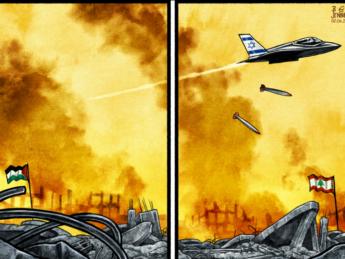
A propagandistic Guardian cartoon about destruction in Lebanon and Gaza erases terror groups entirely, and is a perfect illustration of the outlet's myopic coverage of the war which began when Hamas carried out their barbaric pogrom on Oct. 7.
NPR carefully avoids placing an iota of responsibility for the damage to southern Lebanon on Hezbollah. In a recent story designed to make it appear as if Israel was destroying homes for no reason, one man NPR interviewed told listeners that nice houses don't house weapons.
NBC, ABC and NPR reported last week on Israel's intensified strikes in Lebanon and how they might interfere with a potential ceasefire deal between the United States and Iran. The reports gave only half the story, omitting mention of Hezbollah's conduct.
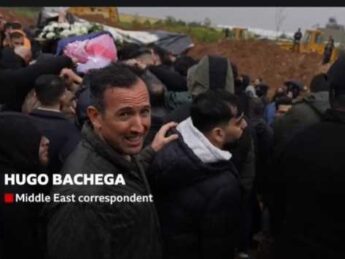
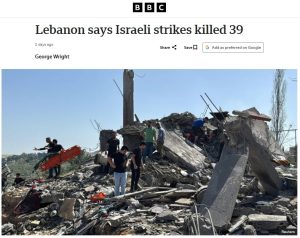
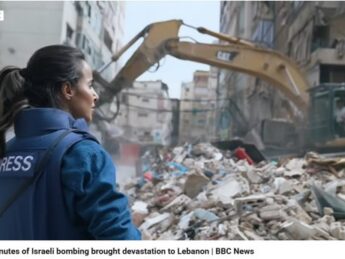
The BBC's Hugo Bachega comes close to accurately reporting on Hezbollah's cynical exploitation of Lebanon, but uses framing and carefully chosen interviews to revert back to a one-sided narrative of Israeli responsibility
The New York Times wanted to examine how support for Hezbollah is impacted by the terror organization's war with Israel. Trying to demonstrate its arguments, the paper demonstrated faulty logic.
Mirroring its slanted Gaza Strip coverage, BBC strips Hezbollah tunnels from its Lebanon reporting, thereby falsely presenting Israeli steps against the terror infrastructure as "war crimes" targeting civilian towns.
A superficial, softball interview of Irish hip hop band Kneecap ignored the group's hateful, inflammatory, anti-Israel rhetoric. NPR abandoned journalistic integrity in favor of cool vibes.