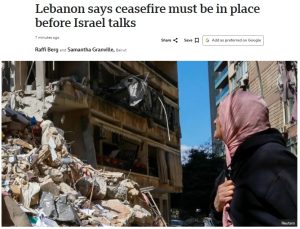
NPR's reporting on Lebanon sounded like it had been scripted by Hezbollah's media arm. By distorting history, ignoring Hezbollah's attacks on Israel and ceasefire violations, and leaving out important context, NPR cast Israel as the perpetual aggressor.
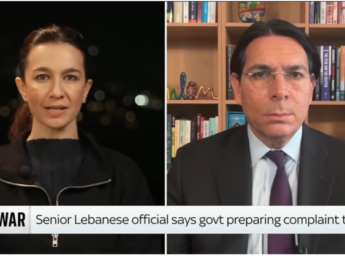
Sky’s decision not to issue an on-air correction, and either remove or edit the various versions of Hakim’s misinformation on civilian deaths in Lebanon at the time, means that Sky viewers, and their social media followers, will continue to be grossly misled.
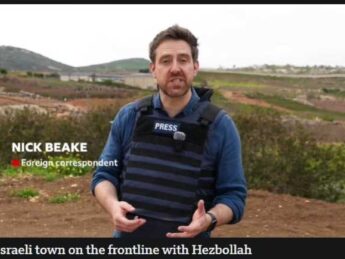
Despite the BBC having a permanent bureau in Jerusalem, its audiences have seen remarkably little reporting from the sites of Hezbollah attacks and the Israelis affected by them have been largely ignored. As these reports from Metula show, even when the BBC did send staff to one of the places worst affected by both this round of hostilities and the previous one, those journalists still managed to adhere to the "invisible Israelis" style of reporting that avoids telling audiences the whole story.
ABC News profiled atrocity denier and terrorist supporter Rania Khalek, where she was allowed to spread misinformation about IDF operations in Lebanon, unchallenged. Close in time, two other videos featured ABC correspondents who suggested the IDF was not only targeting Hezbollah in Lebanon.
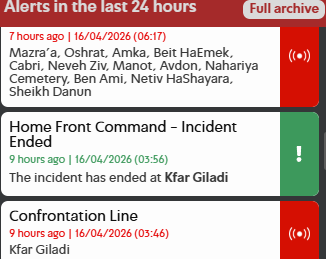
Hours after residents of Kfar Giladi heard sirens multiple times and Hezbollah boasted of having fired rockets at the town, NBC reported to its readers that Kfar Giladi was quiet, and any noise there was only from Israeli munitions directed towards Lebanon.
Two different interviews, one with a Pakistani diplomat and one with an Israeli diplomat, showcase how the BBC uses language and framing to construct a narrative. This allows the corporation to purport to show both sides of a conflict, while presenting those sides in a way to whitewash one and vilify the other.
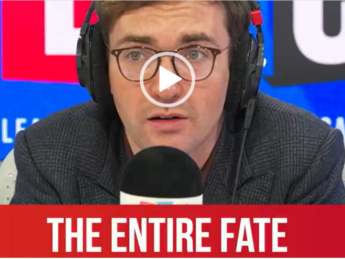
It’s impossible not to see within Goodall’s caricature of an all-powerful Israel nefariously determining the fate of the world an evocation of toxic conspiratorial tropes about Jewish or Israeli power – a cabal of bad actors representing an organic obstacle to peace and progress.
Despite clear statements from both the US and Israel that the ceasefire agreement did not include Lebanon, the BBC Today program's framing and language created an image of an out-of-control Israel risking the fragile peace, while never clearly informing listeners that Hezbollah is a proxy Iranian military occupying Lebanon which has, once again, started a war with Israel on behalf of the Islamic regime.
BBC audience understanding of the upcoming talks between Israel and Lebanon – and any future developments – would of course be greatly enhanced were the corporation to focus less on framing of the story and actually provide information concerning the stance of the terrorist organization that brought about the need for them in the first place and is apparently intent on ensuring that they do not succeed.
Sky News journalist Yalda Hakim acknowledged that she got it wrong when claiming that the IDF had killed "300 civilians" - but seems to think there's no need to formally correct the error.