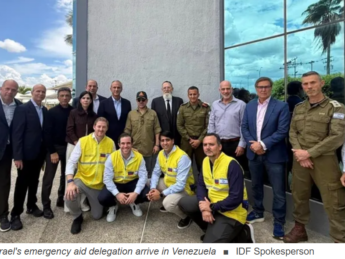
Israel sends a humanitarian delegation to Venezuela to help after the earthquakes, despite a lack of diplomatic relations. Slovenia's new government has done a 180 degree pivot towards Israel. The Board of Peace moves forward with a new plan to cut out Hamas.
Dalal Saoud, reporting from Lebanon for United Press International, "opened a support front" — to borrow from her own ambiguous terminology for Hezbollah's unprovoked rocket attacks on Israel — on behalf of the Iranian proxy.
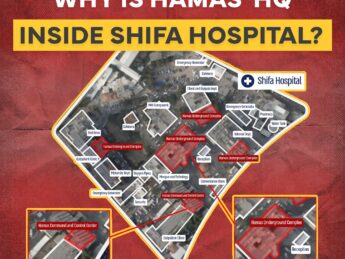
Hamas has retaken hospitals and schools and is using them to torture Gazans. Diplomatic relations between Israel and Brazil are strained. Israeli film director, critical of the Israeli government, is boycotted from a French film festival.
President Herzog's visit to Costa Rica and Panama underscores expanding Israeli diplomatic ties to the region. Top ICC prosecutor says no evidence to show that Israel committed genocide in Gaza. First Palestinian submits complaint to ICC asking to prosecute Hamas for war crimes against Palestinians.
Harvard's President admits the university has a problem of ignorance. Israel wants to strengthen relations with the Christian world. And why are Israelis happy?
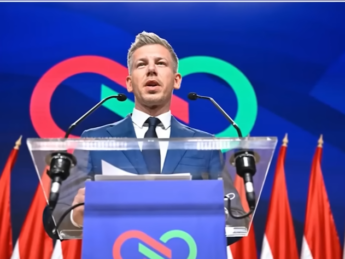
Hungary appears to be friendly still. Ireland finds new ways to outrage. And a terror-linked NGO refuses to comply with Israel's registration requirement.
Two different interviews, one with a Pakistani diplomat and one with an Israeli diplomat, showcase how the BBC uses language and framing to construct a narrative. This allows the corporation to purport to show both sides of a conflict, while presenting those sides in a way to whitewash one and vilify the other.
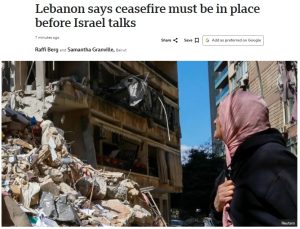
BBC audience understanding of the upcoming talks between Israel and Lebanon – and any future developments – would of course be greatly enhanced were the corporation to focus less on framing of the story and actually provide information concerning the stance of the terrorist organization that brought about the need for them in the first place and is apparently intent on ensuring that they do not succeed.