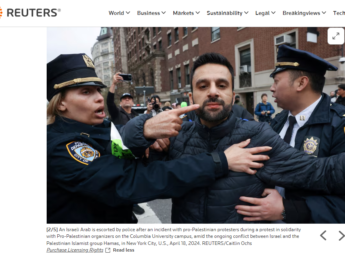
The story which played out last week in Morningside Heights bore an uncanny resemblance to an unforgettable bloody incident which transpired Sept. 29, 2000 in Jerusalem at the outbreak of the Second Intifada. It’s far from clear that journalists have gleaned the necessary lessons from the misreporting of Tuvia Grossman’s ordeal.
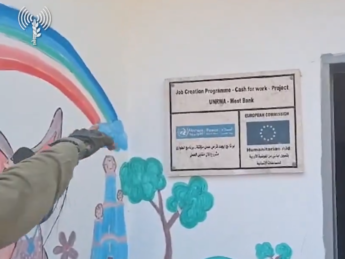
Given CNN’s fondness for investigations, one is left to wonder: why isn’t CNN devoting any substantial effort to holding UNRWA to account by asking the hard questions of the agency?
The Washington Post is failing to shine a light on institutions that are propagating antisemitism, a virus that has resulted in the murder of millions in living memory. The newspaper is failing to provide adequate coverage of the ICRC and UNRWA, CAMERA tells the Algemeiner.
Although Lawfare’s Editor in Chief Benjamin Wittes and Managing Editor Tyler McBrien were informed of errors and distortions in a piece by Marc Garlasco, they remain uncorrected.
PBS is peddling Hamas propaganda via representatives from Médecins Sans Frontières (MSF), also known by its English translation, “Doctors Without Borders.” Representatives are accusing Israel of war crimes and demanding a ceasefire while denying Hamas' role in the war.
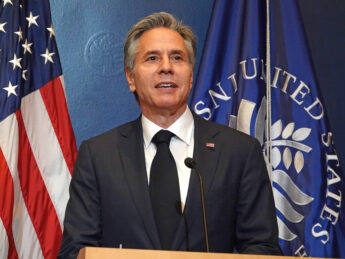
Media outlets, including CNN, cannot simply treat UN and ICC figures as neutral, unbiased sources whose claims can be left uncontextualized or unchallenged. In times of war, journalists must be extra careful, too. To do otherwise is to risk playing a part in Hamas’ cynical use of human shields and civilian deaths.
In response to distressing revelations uncovered by CAMERA's Arabic department, the BBC has launched an investigation into its personnel with pro-Hamas sympathies for the October 7 Massacre.
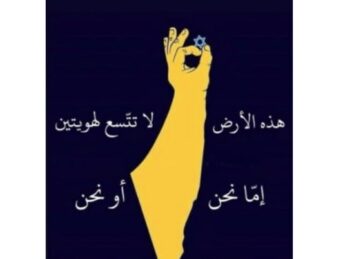
An Amnesty International USA board member and director at a U.S.-funded NGO shares social media content that dignifies the murder of Jewish civilians, praises Palestinian war crimes, lies about the laws of war, and argues Israel will be expelled from the Middle East because there isn't enough room for the Jewish-Israeli people.
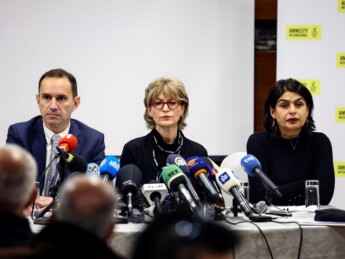
An Amnesty official suggested the reason neither he nor Amnesty will address concerns over factual errors is because such time won't “contribute to helping to end Israeli apartheid.” In other words, the conclusion has already been declared and the facts don’t matter. The hypothesis must be treated as correct regardless of what the data shows. This is not the behavior of a credible fact-finder.