The Guardian upheld our complaint, and corrected the opening sentence of an article falsely claiming that Israel "invaded" Lebanon in 2023, while erasing Hezbollah entirely.
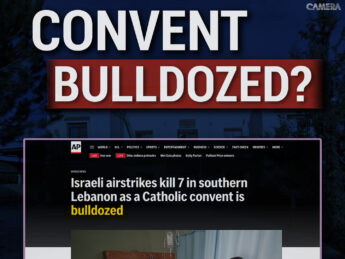
Did the AP base its “convent is bulldozed” headline on unconfirmed rumors relayed by someone who was not on the site and didn’t see it for herself? CAMERA calls on the AP either to produce direct substantiation that the convent was bulldozed, or to retract its false headline.
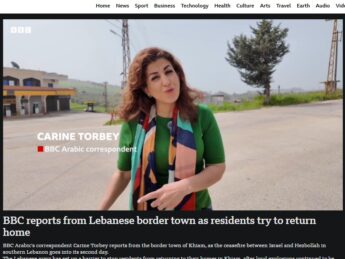
Remarkably, Torbey – who only utters the word Hezbollah once in her entire report – has nothing to tell BBC audiences about the terrorist organization’s rejection of Lebanon’s direct negotiations with Israel or the threats toward the Lebanese president and government from Hezbollah officials that have been voiced both before and since the ceasefire came into effect.
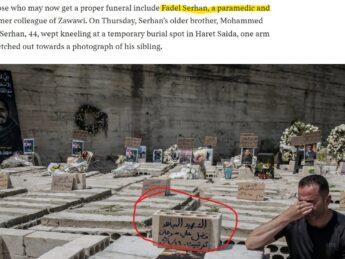
Writing in The Times, Beirut-based Sally Hayden seemed to go out of her way to avoid the topic of Hezbollah fighters killed in the war. One man mentioned by name, described by Hayden only as a "paramedic," is actually identified as a "martyred jihad fighter" in the tombstone on the accompanying photo.
NPR's reporting on Lebanon sounded like it had been scripted by Hezbollah's media arm. By distorting history, ignoring Hezbollah's attacks on Israel and ceasefire violations, and leaving out important context, NPR cast Israel as the perpetual aggressor.
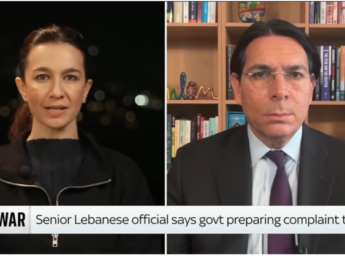
Sky’s decision not to issue an on-air correction, and either remove or edit the various versions of Hakim’s misinformation on civilian deaths in Lebanon at the time, means that Sky viewers, and their social media followers, will continue to be grossly misled.
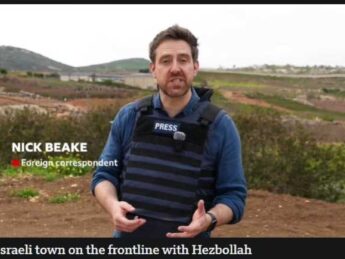
Despite the BBC having a permanent bureau in Jerusalem, its audiences have seen remarkably little reporting from the sites of Hezbollah attacks and the Israelis affected by them have been largely ignored. As these reports from Metula show, even when the BBC did send staff to one of the places worst affected by both this round of hostilities and the previous one, those journalists still managed to adhere to the "invisible Israelis" style of reporting that avoids telling audiences the whole story.
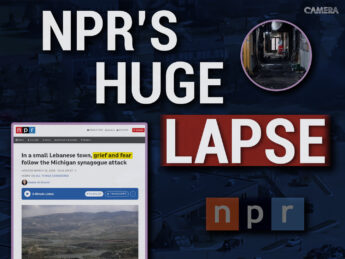
NPR’s multiple reports on the attempted terror attack against a Michigan synagogue ignored any voices from the Temple Israel community, though as CAMERA swiftly documented, within two days of the attack, the network was on the ground in the attacker's Lebanese hometown to report on the "grief and fear" there. After hearing from listeners, including many CAMERA readers, NPR's public editor admitted the extraordinary lapse. Will NPR take the lesson to heart?