The BBC chose not to tell its audiences about the CPJ review into the deaths of journalists in Gaza. Why is an institution committed to impartiality obscuring the truth?
ABC should have been prepared for anti-Zionist Mayor Zohran Mamdani's rehearsed answers about Israel. Instead, the network let Mamdani's false definition of Jewishness and misstatements about Israel go unchallenged.
A Telegraph article on the struggles of cancer patients in Gaza ignored Hamas’ role in the territory’s healthcare crisis, and conveyed the pre-determined narrative of Israeli responsibility while failing to reach out to COGAT, the agency responsible for the transfer of medicine and the approval of permits for treatment abroad.
In covering the U.N. Commission of Inquiry’s report, “‘The essence of childhood has been destroyed’: Israel’s deliberate targeting of Palestinian children in the Occupied Palestinian Territory since 7 October, 2023,” The New York Times, CNN, Reuters, and NBC blindly parroted its contents while completely ignoring critical questions and counter-critiques.
The BBC fails to do basic fact checking on fresh claims of targeting journalists in Gaza, a failure which illustrates a much deeper and more insidious problem than simply erosion of journalistic standards.
During this past weekend's broadcasts on MS NOW, panelists and guests repeatedly flattened the strict legal definition of genocide into a casual political talking point. Genocide is a legal term, and whether a state committed it must be proved in court, not in the newsroom.
The Guardian's Arwa Mahdawi accused Gwyneth Paltrow of "Gwynocide" for starring in an Israeli ad. As Howard Jacobsen noted, "There is a sadistic triumphalism in charging Jews with genocide," CAMERA's Adam Levick writes in The Jewish Chronicle.
Tricia Miller, Director of CAMERA’s Partnership of Christians and Jews, joined Christian Friends of Leket Israel to discuss what it means for Christians to stand with the Jewish people.
Middle East correspondent Yolande Knell provided what was framed as a deep dive into the volatile property disputes of East Jerusalem. But what was delivered to BBC audiences was a masterclass in deliberate distortion. Knell didn’t merely stumble into bias; she systematically bypassed the legal and historical realities of the area to fit a constructed narrative.
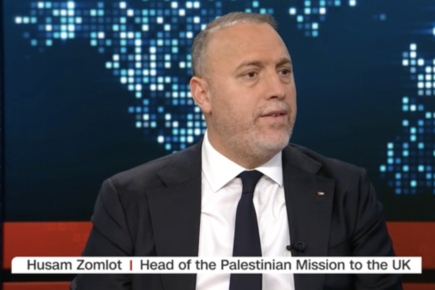
CNBC interviewed Palestinian diplomat Husam Zomlot. The hosts deserve credit for pushing back on many of Zomlot's outrageous statements, but there was still a lot that went unaddressed.